
Quick & Easy Recipes for Everyday Cooks
Welcome to Food By Ayaka!
Escarole and Beans Recipe
My husband loves rich, meat-heavy meals, but escarole and beans has slowly become one of his favorites, especially in the colder months. In winter, it is comforting and warming, and in busy weeks, it is simple and reliable. He always says it smells like something his grandmother would make, and that alone makes it special. What I love most is how this dish fits into real life—it’s easy, forgiving, and full of flavor without needing fancy techniques.
Escarole and beans is one of those recipes that feels simple, humble, and comforting all at the same time. It’s the kind of dish that doesn’t try too hard, yet somehow delivers deep flavor and warmth in every spoonful. This recipe has been passed down through generations in many Italian families, and for good reason. It’s affordable, nourishing, and perfect when you want something hearty without being heavy.
I have made escarole and beans so many times over the years, and I always come back to the same method. I use good olive oil, fresh garlic, and quality beans every single time. I don’t rush it, and I let the flavors come together naturally. That slow simmer is where the magic happens. This is not a recipe you stress over—it’s one you relax into.

You can serve escarole and beans as a main dish, some days as a side, also with crusty bread, grilled sausage, or even a simple salad. It adapts beautifully to whatever you need it to be, which is why I keep it in my regular rotation.
Its Perfect For:
- Busy Weeknights
- Cold Weather Meals
- Meatless Mondays
- Family Dinners
- Budget-Friendly Cooking
Ingredients
- 2 heads escarole, washed and roughly chopped
- 2 tablespoons olive oil
- 4 cloves garlic, thinly sliced
- 1/2 teaspoon red pepper flakes (optional, for heat)
- 2 cans (15 oz each) cannellini beans, drained and rinsed
- 3 cups vegetable broth or chicken broth
- Salt, to taste
- Black pepper, to taste
- 1/4 teaspoon dried oregano (optional)
- Fresh parsley, chopped (for garnish)
- Grated Parmesan cheese (optional, for serving)
- Crusty bread, for serving
Kitchen Equipment You’ll Need
- Large pot or deep skillet
- Sharp knife
- Cutting board
- Wooden spoon
- Colander
- Measuring cups and spoons
- Ladle for serving
How to Make Escarole and Beans
Step 1
Prepare the escarole: Trim the root ends from the escarole heads and separate the leaves. Wash thoroughly, as escarole often holds dirt between the layers. Roughly chop the leaves into bite-sized pieces and set aside. Do not dry completely—having a little moisture on the leaves helps them wilt properly during cooking.
Step 2
Sauté the garlic: In a large pot or deep skillet, heat the olive oil over medium heat. Add the sliced garlic and cook gently for about 30–60 seconds, stirring constantly, until fragrant but not browned. If using red pepper flakes, add them now and stir briefly to release their flavor into the oil.
Step 3
Add the escarole: Gradually add the chopped escarole to the pot, a handful at a time. Stir after each addition, allowing the leaves to wilt slightly before adding more. The escarole will reduce significantly in volume as it cooks. Continue stirring for about 5–7 minutes, until the greens are tender and evenly coated with the garlic-infused oil.
Step 4
Add beans and broth: Stir in the cannellini beans, making sure they are evenly distributed throughout the escarole. Pour in the broth and add salt, black pepper, and dried oregano if using. Stir well, then bring the mixture to a gentle simmer.
Step 5
Simmer and develop flavor: Lower the heat to medium-low and let the escarole and beans simmer uncovered for 15–20 minutes. Stir occasionally, allowing the flavors to meld together and the broth to slightly reduce. Taste and adjust seasoning as needed, adding more salt or pepper if desired.
Step 6
Finish and serve: Once the broth has thickened slightly and the escarole is very tender, remove the pot from the heat. Ladle the escarole and beans into bowls, garnish with fresh chopped parsley, and finish with grated Parmesan cheese if you like. Serve hot with crusty bread for dipping into the flavorful broth.
Tips for the Best Escarole and Beans
- Wash the escarole very well
Escarole hides dirt between its leaves.
Wash it multiple times until the water is clear.
This step really matters. - Don’t burn the garlic
Garlic should be fragrant, not brown.
Low to medium heat works best.
Burnt garlic changes the flavor completely. - Use good olive oil
This dish relies on simple ingredients.
A good olive oil adds depth.
You will taste the difference. - Add escarole slowly
It wilts down a lot as it cooks.
Add it in batches.
This helps it cook evenly. - Simmer gently, not fast
A slow simmer builds flavor.
Rushing makes it flat.
Patience makes it better. - Taste before serving
Beans absorb seasoning as they cook.
Adjust salt at the end.
Every pot is different. - Let it rest before serving
A short rest brings flavors together.
Even five minutes helps.
It tastes richer after sitting.
Optional Ingredients
- Red pepper flakes for heat
- Parmesan rind for deeper flavor
- Fresh lemon juice for brightness
- Pancetta for a savory twist
- Fresh parsley for garnish
- Extra broth for a soupier version
How to Serve Escarole and Beans?
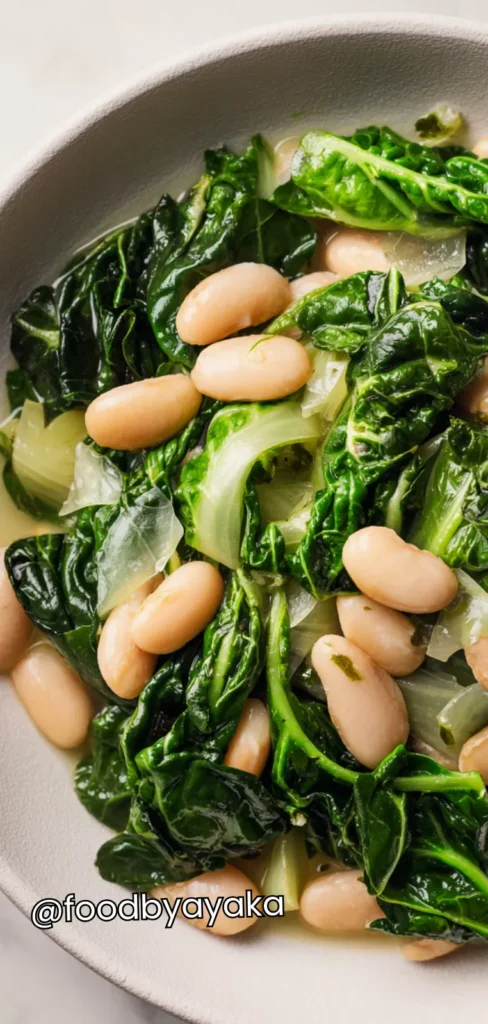
I like to serve escarole and beans hot, right after it finishes simmering, in wide bowls so there is room for the broth. I always drizzle a little extra olive oil on top because it adds richness and makes everything shine. I usually place the bread on the table first, because everyone reaches for it before the bowls even arrive.
I also enjoy serving escarole and beans as part of a larger meal. I pair it with roasted chicken, baked fish, or Italian sausage when I want something comforting but balanced. It works beautifully as a side dish because it brings warmth and softness to plates that need something cozy and nourishing.
I sometimes serve escarole and beans the next day in a thicker form. I reduce the broth while reheating and spoon it over toasted bread like a stew. I top it with grated Parmesan or a squeeze of lemon, and it feels like a brand-new dish that still tastes familiar and comforting.
Is Escarole and Beans Healthy?
Escarole and beans is a very nourishing dish made with whole, natural ingredients. Escarole is rich in fiber, vitamins, and antioxidants, while beans provide plant-based protein and minerals. Together, they support digestion and steady energy.
Because it’s low in saturated fat and customizable with less salt, it fits well into balanced eating. It fills you up without being heavy, which is why I always feel good after eating it.
Variations and Substitutions
- Add Chicken Broth Instead of Vegetable
This adds a deeper flavor.
Great if you want richness.
Still keeps the dish light.
Perfect for non-vegetarians. - Use Great Northern Beans
They are slightly firmer.
Hold their shape well.
Good for longer simmering.
Flavor stays mild. - Add Sausage
Italian sausage adds heartiness.
Brown it first, then continue.
Great for colder nights.
Makes it a full meal. - Make It Spicy
Add extra red pepper flakes.
A little goes a long way.
Balances the beans nicely.
Perfect for spice lovers. - Add Tomatoes
Use diced or crushed tomatoes.
Adds acidity and color.
Creates a stew-like feel.
Very comforting. - Use Swiss Chard Instead
If escarole is unavailable.
Chard works beautifully.
Slightly milder taste.
Still very nutritious. - Add Pasta
Small pasta turns it into soup.
Great for kids.
Very filling and cozy.
Perfect for leftovers. - Finish with Lemon
A squeeze at the end.
Brightens everything.
Balances richness.
Simple but effective.
How to Store and How to Reheat
To store escarole and beans, let it cool completely before transferring it to an airtight container. Keep it in the refrigerator for up to four days. The flavors continue to develop, which makes leftovers especially good.
To reheat, warm it slowly on the stove over medium-low heat. Add a splash of broth or water if it thickens too much. Stir gently and heat until warm, not boiling, to keep the greens tender.
Frequently Asked Questions About Escarole and Beans
Can escarole and beans be made ahead of time?
Yes, this dish is perfect for making ahead of time because the flavors deepen as it sits, and it often tastes even better the next day.
Does escarole need to be blanched first?
No, blanching is not necessary because escarole softens naturally while cooking, which also helps preserve its robust flavor.
Can I use canned beans without rinsing them?
It is strongly recommended to rinse canned beans to remove excess sodium, which keeps the broth tasting cleaner and lighter.
What if my escarole tastes too bitter?
Cooking reduces most of the bitterness, and the beans help balance the flavor, while a little lemon juice at the end can make it even milder.
Escarole and Beans Recipe
Course: Main Dish / Side DishCuisine: Italian-AmericanDifficulty: EasyServings
4
servingsPrep time
15
minutesCooking time
30
minutesDiscover a cozy and easy Escarole and Beans recipe that’s perfect for weeknights, family dinners, or meatless meals. Learn tips, variations, and serving ideas to make this comforting Italian classic your new favorite.
Ingredients
2 heads escarole, washed and roughly chopped
2 tablespoons olive oil
4 cloves garlic, thinly sliced
1/2 teaspoon red pepper flakes (optional, for heat)
2 cans (15 oz each) cannellini beans, drained and rinsed
3 cups vegetable broth or chicken broth
Salt, to taste
Black pepper, to taste
1/4 teaspoon dried oregano (optional)
Fresh parsley, chopped (for garnish)
Grated Parmesan cheese (optional, for serving)
Crusty bread, for serving
Directions
- Prepare the escarole: Trim the root ends from the escarole heads and separate the leaves. Wash thoroughly, as escarole often holds dirt between the layers. Roughly chop the leaves into bite-sized pieces and set aside. Do not dry completely—having a little moisture on the leaves helps them wilt properly during cooking.
- Sauté the garlic: In a large pot or deep skillet, heat the olive oil over medium heat. Add the sliced garlic and cook gently for about 30–60 seconds, stirring constantly, until fragrant but not browned. If using red pepper flakes, add them now and stir briefly to release their flavor into the oil.
- Add the escarole: Gradually add the chopped escarole to the pot, a handful at a time. Stir after each addition, allowing the leaves to wilt slightly before adding more. The escarole will reduce significantly in volume as it cooks. Continue stirring for about 5–7 minutes, until the greens are tender and evenly coated with the garlic-infused oil.
- Add beans and broth: Stir in the cannellini beans, making sure they are evenly distributed throughout the escarole. Pour in the broth and add salt, black pepper, and dried oregano if using. Stir well, then bring the mixture to a gentle simmer.
- Simmer and develop flavor: Lower the heat to medium-low and let the escarole and beans simmer uncovered for 15–20 minutes. Stir occasionally, allowing the flavors to meld together and the broth to slightly reduce. Taste and adjust seasoning as needed, adding more salt or pepper if desired.
- Finish and serve: Once the broth has thickened slightly and the escarole is very tender, remove the pot from the heat. Ladle the escarole and beans into bowls, garnish with fresh chopped parsley, and finish with grated Parmesan cheese if you like. Serve hot with crusty bread for dipping into the flavorful broth.