
Quick & Easy Recipes for Everyday Cooks
Welcome to Food By Ayaka!
Authentic Greek Bougatsa Recipe
My mother always loved simple desserts, but bougatsa in our kitchen is something extra special and full of warmth and tradition. She used to say that the secret is not only in the ingredients, but in the patience while layering and baking. In her way, it is soft, creamy inside and perfectly crisp outside, and it fills the whole house with the most comforting smell. Watching her make it taught me how important small details are in baking. There is something truly comforting about a warm slice of Authentic Greek Bougatsa, fresh out of the oven with its golden, crispy layers and soft, creamy center.
This beautiful pastry comes from Greece and is loved for its delicate balance between flaky phyllo and smooth semolina custard. Every bite feels light yet rich, with a gentle sweetness that makes it perfect for both breakfast and dessert. It is one of those recipes that looks impressive, but once you understand the steps, it becomes a lovely and relaxing dish to prepare at home.
I have made this recipe many times over the years, and I use simple ingredients that are easy to find. I use good quality butter, fresh milk, and always take my time with the custard to make sure it is smooth and creamy. I always keep the phyllo covered so it stays soft and easy to handle. These small habits really make a big difference in the final result.
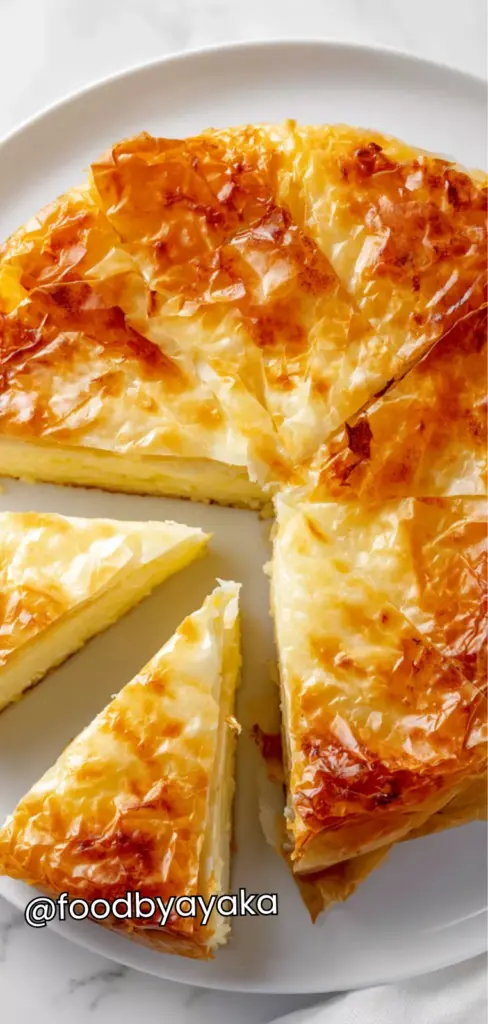
You can serve bougatsa warm, some powdered sugar on top, also with a sprinkle of cinnamon for extra flavor. It pairs beautifully with a cup of coffee or tea, and sometimes I like to add a little honey drizzle for a sweeter touch. It is simple, but so satisfying and comforting.
Its Perfect For:
- Cozy weekend breakfasts when you want something homemade and special
- Afternoon coffee breaks with family or friends
- Light desserts after a simple meal
- Holiday mornings or festive gatherings
- When you want to try a traditional Greek recipe at home
Ingredients
- 1 package phyllo dough (thawed)
- 4 cups whole milk
- 1/2 cup semolina flour (fine)
- 1/2 cup granulated sugar
- 2 large eggs
- 1 teaspoon vanilla extract
- 1/4 teaspoon salt
- 1/2 cup unsalted butter, melted
- Powdered sugar (for dusting)
- Ground cinnamon (for dusting)
Kitchen Equipment You’ll Need
- Medium saucepan
- Whisk
- Mixing bowls
- Baking dish
- Pastry brush
- Oven
- Spatula
How to make Authentic Greek Bougatsa
Step 1
Prepare the custard: In a medium saucepan over medium heat, pour in the milk and let it warm up gently without boiling. Slowly whisk in the semolina flour, stirring constantly to prevent any lumps from forming. Continue stirring as the mixture thickens into a smooth, creamy consistency, which should take about 5–7 minutes. Once thickened, remove from heat and let it cool slightly for a few minutes.
Step 2
Add eggs and flavoring: In a separate bowl, lightly beat the eggs with sugar, vanilla extract, and salt until well combined. Gradually pour this egg mixture into the warm semolina custard while whisking continuously to avoid scrambling the eggs. Return the saucepan to low heat and cook for another 2–3 minutes, stirring gently, until the custard becomes silky and slightly thicker. Remove from heat and set aside to cool slightly while you prepare the pastry.
Step 3
Prepare the phyllo layers: Preheat your oven to 350°F (180°C). Brush a baking dish generously with melted butter. Carefully lay down one sheet of phyllo dough and brush it lightly with butter, then repeat this process layering about 6–7 sheets at the bottom, making sure to keep the remaining phyllo covered with a damp towel so it doesn’t dry out. Let the edges hang slightly over the sides of the dish for later folding.
Step 4
Assemble the Bougatsa: Pour the prepared custard evenly over the layered phyllo base, spreading it gently with a spatula to create an even layer. Fold the overhanging phyllo sheets over the custard, then layer another 5–6 sheets on top, brushing each one with butter as you go. Tuck in the edges neatly to seal the filling inside.
Step 5
Bake the pastry: Place the dish in the preheated oven and bake for 30–35 minutes, or until the top is beautifully golden brown and crisp. If needed, rotate the pan halfway through baking to ensure even browning. The phyllo should become flaky and slightly puffed with a rich golden color.
Step 6
Cool and serve: Remove the Bougatsa from the oven and allow it to cool for about 10–15 minutes before slicing, which helps the custard set properly. Cut into squares or rectangles, then generously dust the top with powdered sugar and a sprinkle of ground cinnamon. Serve warm for the best texture and flavor.
Tips
- Always thaw your phyllo dough properly in the refrigerator overnight. If it is still cold or stiff, it can tear easily while working. Let it sit at room temperature before using so it becomes soft and flexible.
- Keep the phyllo sheets covered with a damp towel at all times. They dry out very quickly, and once they do, they become fragile and hard to use. This simple step helps keep everything smooth and manageable.
- Stir the custard constantly while cooking. This prevents lumps from forming and keeps the texture silky. If you rush this step, the custard can become uneven and affect the final result.
- Let the custard cool slightly before adding the eggs. If it is too hot, the eggs may scramble, and you will not get that smooth creamy texture. Gentle mixing is the key here.
- Use enough butter between each phyllo layer. This is what gives bougatsa its beautiful crispy texture. Do not skip brushing, even if it feels repetitive. It makes a big difference.
- Do not overcrowd the baking dish with too many layers. Keeping a good balance between layers and filling ensures even baking. This way, the pastry cooks evenly and stays light.
- Let the bougatsa rest after baking before cutting. This helps the custard set properly and makes slicing much easier. If you cut it too early, the filling may be too soft.
Optional Ingredients
- Lemon zest for a fresh, light flavor
- Orange zest for a slightly sweet citrus aroma
- Honey for extra sweetness
- Vanilla bean instead of extract for a richer taste
- Cream for a more indulgent custard
- Nutmeg for a warm, subtle spice
How to serve Authentic Greek Bougatsa?
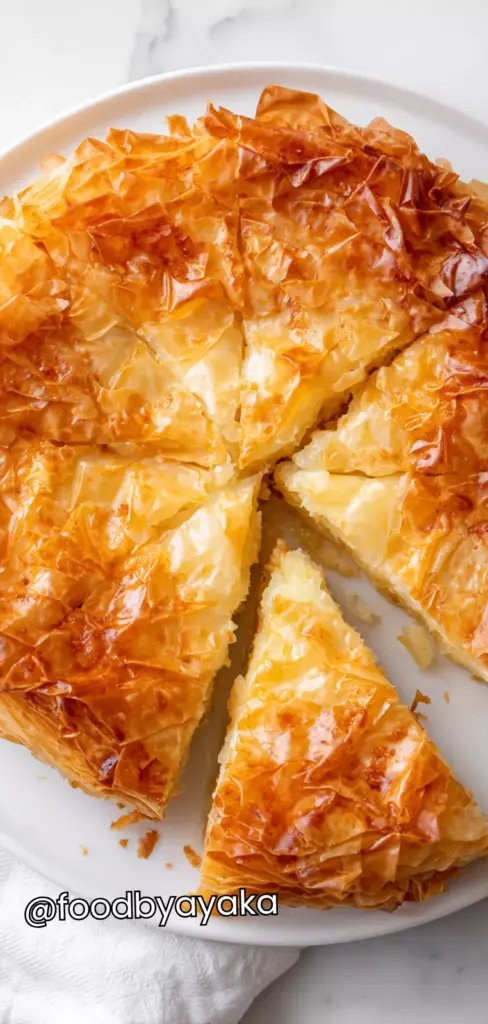
I love serving bougatsa while it is still warm, just a few minutes after it comes out of the oven. The texture at this point is perfectly balanced, with a crisp golden top that gently flakes when cut and a soft, creamy custard inside. I usually slice it into neat squares or rectangles and place them carefully on a serving plate so each portion keeps its structure and looks inviting. Serving it warm enhances both the aroma and the flavor, making the experience more comforting and enjoyable.
I always finish each piece with a light dusting of powdered sugar and a sprinkle of cinnamon. This simple combination adds a subtle sweetness and a beautiful visual contrast against the golden pastry. Sometimes, I like to drizzle a small amount of honey over the top, which melts slightly into the warm layers and adds a gentle richness. A cup of coffee, tea, or even a cold glass of milk pairs beautifully alongside, balancing the sweetness and making it feel complete.
I also enjoy serving bougatsa as part of a relaxed brunch or a small gathering with friends and family. In these moments, I present it on a large platter so everyone can help themselves, which creates a warm and shared dining experience. Occasionally, I add a few fresh fruits on the side or a light garnish to make the presentation more vibrant. It is a versatile dish that fits both casual mornings and more special occasions.
Is Authentic Greek Bougatsa healthy?
Bougatsa is a rich pastry made with butter, milk, sugar, and phyllo dough, so it is naturally higher in calories and should be enjoyed in moderation. It provides energy and satisfaction, but it is not typically considered a low-calorie or low-fat food.
At the same time, it can still be enjoyed as part of a balanced diet when eaten occasionally. You can also make lighter adjustments by reducing sugar or using smaller portions. Pairing it with fresh fruit or a simple drink can help create a more balanced serving overall.
Variations and Substitutions
- Cheese Bougatsa
Instead of a sweet custard, you can use a filling made from feta or ricotta cheese. It creates a savory version that is creamy and slightly salty. This variation is popular for breakfast or a light snack. It offers a completely different but equally satisfying taste. - Chocolate Bougatsa
Add chocolate chips or a chocolate layer inside the custard. The chocolate melts during baking, creating a rich and indulgent filling. This version is especially loved by dessert fans. It is perfect when you want something sweeter and more decadent. - Vegan Bougatsa
Replace dairy milk with plant-based milk and use vegan butter alternatives. For the custard, use cornstarch or a plant-based thickener instead of eggs. The result is still creamy and enjoyable. It is suitable for those following a vegan lifestyle. - Low-Sugar Version
Reduce the sugar in the custard or replace it with natural sweeteners like honey or maple syrup. This makes the dessert lighter in sweetness while still flavorful. It is a good option for those watching their sugar intake. The texture remains smooth and pleasant. - Gluten-Free Version
Use gluten-free phyllo dough if available in your area. Ensure all other ingredients are also gluten-free. While the texture may vary slightly, it still delivers a delicious result. This allows those with gluten sensitivity to enjoy it. - Citrus Bougatsa
Add lemon or orange zest into the custard for a fresh citrus aroma. This brightens the flavor and balances the richness of the cream. It creates a lighter and more refreshing dessert. It is especially nice during warmer seasons. - Creamier Custard
Replace part of the milk with heavy cream for a richer filling. This makes the custard thicker, smoother, and more indulgent. It is ideal for special occasions. The result is a more luxurious texture. - Nut Topping Version
Add chopped pistachios, almonds, or walnuts on top before serving. The nuts add crunch and a subtle earthy flavor. This variation also improves presentation. It gives the dish a more festive and textured finish.
How to store, How to reheat
You can store leftover bougatsa in an airtight container in the refrigerator once it has completely cooled. It will stay fresh for up to 3 days while maintaining its flavor, although the phyllo may soften slightly over time. Proper storage helps preserve both the taste and texture as much as possible.
To reheat, place the bougatsa in a preheated oven at a low temperature for about 10–15 minutes until warmed through. This method helps restore some of the crispness of the phyllo while keeping the custard soft. Avoid microwaving if possible, as it can make the pastry lose its flaky texture and become soggy.
Frequently Asked Questions About Authentic Greek Bougatsa
Can I prepare bougatsa the day before serving?
Yes, you can prepare the custard and phyllo layers ahead of time and assemble it when needed. For best results, bake it fresh before serving. This keeps the phyllo crisp and the custard perfectly set.
Why did my phyllo dough tear while working?
Phyllo dough dries out quickly if left uncovered. Always keep it under a damp towel while assembling. Handling it gently and patiently also helps prevent tearing.
Can I freeze bougatsa after baking?
Yes, bougatsa can be frozen once fully cooled. Wrap it tightly to prevent freezer burn. Reheat it in the oven to bring back its texture before serving.
How do I know when the custard is thick enough?
The custard should coat the back of a spoon and hold its shape slightly. It should not be too runny or overly stiff. Proper thickness ensures a creamy filling after baking.
Authentic Greek Bougatsa Recipe
Course: Breakfast, DessertCuisine: GreekDifficulty: MediumServings
6
servingsPrep time
25
minutesCooking time
35
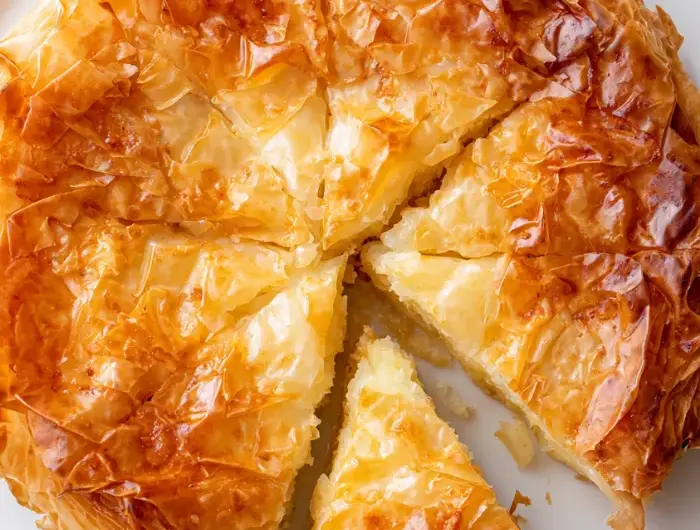
minutesAuthentic Greek Bougatsa recipe made with creamy semolina custard and flaky phyllo dough. Easy step-by-step guide for a traditional Greek breakfast or dessert, perfect for home baking.
Ingredients
1 package phyllo dough (thawed)
4 cups whole milk
1/2 cup semolina flour (fine)
1/2 cup granulated sugar
2 large eggs
1 teaspoon vanilla extract
1/4 teaspoon salt
1/2 cup unsalted butter, melted
Powdered sugar (for dusting)
Ground cinnamon (for dusting)
Directions
- Prepare the custard: In a medium saucepan over medium heat, pour in the milk and let it warm up gently without boiling. Slowly whisk in the semolina flour, stirring constantly to prevent any lumps from forming. Continue stirring as the mixture thickens into a smooth, creamy consistency, which should take about 5–7 minutes. Once thickened, remove from heat and let it cool slightly for a few minutes.
- Add eggs and flavoring: In a separate bowl, lightly beat the eggs with sugar, vanilla extract, and salt until well combined. Gradually pour this egg mixture into the warm semolina custard while whisking continuously to avoid scrambling the eggs. Return the saucepan to low heat and cook for another 2–3 minutes, stirring gently, until the custard becomes silky and slightly thicker. Remove from heat and set aside to cool slightly while you prepare the pastry.
- Prepare the phyllo layers: Preheat your oven to 350°F (180°C). Brush a baking dish generously with melted butter. Carefully lay down one sheet of phyllo dough and brush it lightly with butter, then repeat this process layering about 6–7 sheets at the bottom, making sure to keep the remaining phyllo covered with a damp towel so it doesn’t dry out. Let the edges hang slightly over the sides of the dish for later folding.
- Assemble the Bougatsa: Pour the prepared custard evenly over the layered phyllo base, spreading it gently with a spatula to create an even layer. Fold the overhanging phyllo sheets over the custard, then layer another 5–6 sheets on top, brushing each one with butter as you go. Tuck in the edges neatly to seal the filling inside.
- Bake the pastry: Place the dish in the preheated oven and bake for 30–35 minutes, or until the top is beautifully golden brown and crisp. If needed, rotate the pan halfway through baking to ensure even browning. The phyllo should become flaky and slightly puffed with a rich golden color.
- Cool and serve: Remove the Bougatsa from the oven and allow it to cool for about 10–15 minutes before slicing, which helps the custard set properly. Cut into squares or rectangles, then generously dust the top with powdered sugar and a sprinkle of ground cinnamon. Serve warm for the best texture and flavor.