
Quick & Easy Recipes for Everyday Cooks
Welcome to Food By Ayaka!
Salmon Coconut Curry Recipe
Making these dishes is exciting, but cooking salmon in curry is a little tricky if you’re not careful with timing and temperature. If you love rich, comforting flavors with just the right touch of spice, this Salmon Coconut Curry is perfect for you. The creamy coconut milk combined with red curry paste makes a smooth, aromatic sauce that pairs beautifully with tender salmon. Overcooking can make the fish dry, and undercooking can leave it raw in the middle. But once you get the hang of it, the creamy sauce and tender salmon melt in your mouth, and the flavors are unforgettable.
I have always loved cooking curries at home. I use fresh ingredients, a mix of spices, and a gentle hand when simmering the sauce. Always remember, the key to a delicious curry is balancing heat, sweetness, and acidity. The red curry paste adds warmth, the coconut milk adds creaminess, and a squeeze of lime lifts everything perfectly.
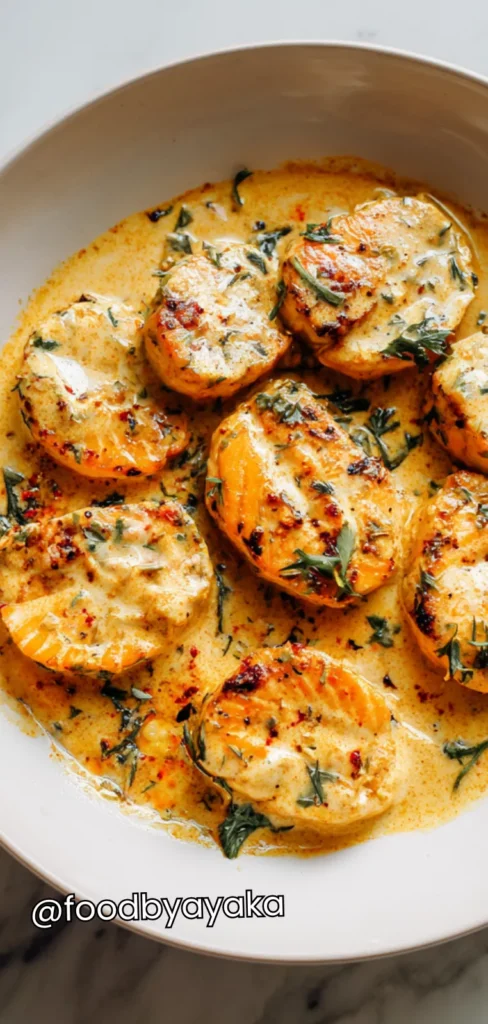
You can serve this curry over fluffy jasmine rice for a classic pairing. Some crunchy naan or steamed vegetables make it even more filling. Also with a side of fresh herbs like cilantro or Thai basil, it’s a restaurant-quality dish right at home.
It’s Perfect For:
- Weeknight family dinners that need minimal effort
- Romantic dinners with a flavorful, elegant dish
- Meal prep for a few days of delicious lunches
- Impressing guests at a casual dinner party
- Comfort food when you want something creamy and hearty
Ingredients
- 1 lb salmon fillets, skin on or off
- 1 tablespoon olive oil or coconut oil
- 1 medium onion, finely chopped
- 3 cloves garlic, minced
- 1 tablespoon fresh ginger, grated
- 1-2 tablespoons red curry paste (adjust to taste)
- 1 can (14 oz) coconut milk
- 1 tablespoon fish sauce
- 1 teaspoon brown sugar
- 1 red bell pepper, sliced thinly
- 1 cup snap peas or green beans
- Juice of 1 lime
- Fresh cilantro, chopped (for garnish)
- Salt and black pepper, to taste
- Cooked jasmine rice, for serving
Kitchen Equipment You’ll Need
- Large skillet or sauté pan with a lid
- Sharp knife and cutting board
- Measuring cups and spoons
- Wooden spoon or silicone spatula
- Small saucepan (optional for thickening sauce)
- Bowl for marinating salmon
- Serving dish for plating
How to Make Salmon Coconut Curry
Step 1
Prepare the salmon: Pat the salmon fillets dry with paper towels and season lightly with salt and black pepper. This helps the fish sear nicely and prevents it from sticking during cooking.
Step 2
Sauté aromatics: Heat olive or coconut oil in a large skillet or pan over medium heat. Add chopped onions and cook for 2–3 minutes until softened. Stir in minced garlic and grated ginger, cooking for an additional 1 minute until fragrant.
Step 3
Add the curry paste: Stir in red curry paste and cook for 1–2 minutes, allowing the spices to bloom and release their flavors. This step intensifies the curry’s taste.
Step 4
Add coconut milk and seasonings: Pour in the coconut milk and stir until smooth. Add fish sauce and brown sugar, stirring to combine. Bring the mixture to a gentle simmer over medium heat.
Step 5
Cook vegetables: Add sliced red bell pepper and snap peas (or green beans) to the curry. Simmer for 3–4 minutes until the vegetables are tender but still crisp.
Step 6
Cook the salmon: Gently place the salmon fillets into the simmering curry, spooning some sauce over the top. Cover the pan with a lid and cook for 6–8 minutes, depending on thickness, until the salmon is cooked through and flakes easily with a fork.
Step 7
Finish with lime and garnish: Remove the pan from heat and squeeze fresh lime juice over the curry. Garnish with chopped cilantro for a burst of color and freshness.
Step 8
Serve: Serve the salmon coconut curry hot over a bed of steamed jasmine rice. Spoon extra sauce over the top for a rich, flavorful presentation.
Tips for Perfect Salmon Coconut Curry
- I always pat my salmon dry before cooking. It helps the fish sear evenly and prevents sticking. Moisture can make the curry watery if skipped.
- I toast my curry paste lightly in oil before adding coconut milk. This releases the flavors and makes the sauce richer.
- I cut vegetables uniformly. It ensures they cook at the same speed and stay tender-crisp.
- I add coconut milk gradually while stirring. This prevents clumping and keeps the sauce smooth.
- I taste the curry before serving. A little more lime or fish sauce can balance sweetness and heat perfectly.
- I avoid overcooking the salmon. I remove it from heat as soon as it flakes easily with a fork.
- I garnish with fresh herbs at the last minute. This keeps colors vibrant and flavors fresh.
Optional Ingredients
- Kaffir lime leaves for aromatic depth
- Lemongrass stalk for a citrusy fragrance
- Baby corn for added crunch
- Thai chili for extra heat
- Spinach or kale for extra greens
- Coconut sugar instead of brown sugar for milder sweetness
How to Serve Salmon Coconut Curry
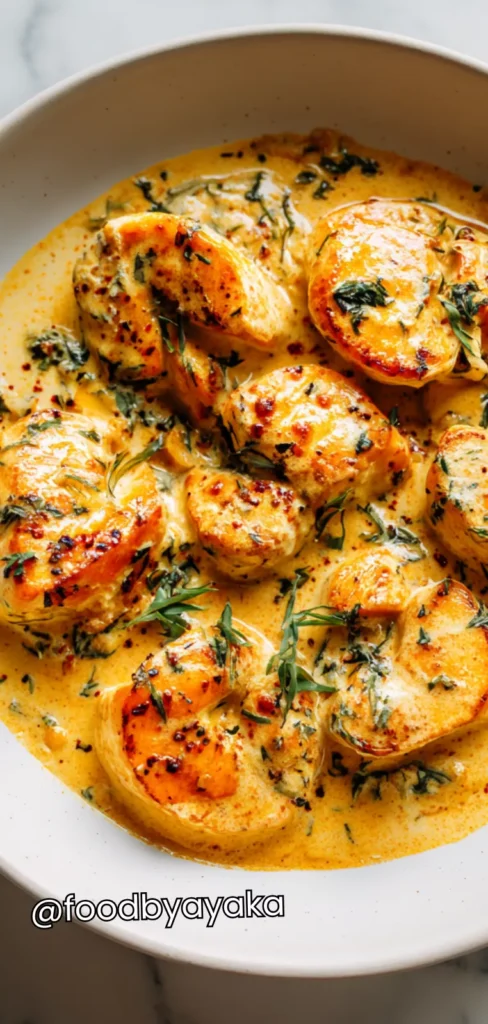
I usually serve this curry straight from the pan over a bed of steaming jasmine rice. The rice soaks up the creamy sauce perfectly, making every bite flavorful and comforting. I like to spoon extra sauce over the top for a luxurious finish that ensures no flavor is left behind.
I also add fresh vegetables like bell peppers, snap peas, or thinly sliced carrots alongside the salmon. They provide color, crunch, and extra nutrition, making the dish look vibrant and feel more complete. You can even sprinkle a few toasted sesame seeds on top for texture and visual appeal.
I finish with a squeeze of lime and a generous sprinkle of fresh cilantro or Thai basil before serving. This brightens the flavors, balances the richness of the coconut milk, and makes the dish look stunning on the table. Serve immediately while warm, because the salmon and vegetables are at their best texture and flavor straight from the pan.
Is Salmon Coconut Curry Healthy?
Salmon coconut curry is a healthy option if you focus on fresh ingredients. Salmon provides high-quality protein and omega-3 fatty acids, which are great for heart health.
The coconut milk adds richness but also healthy fats. Using moderate portions and pairing with vegetables makes this a well-balanced, nutritious meal that fills you up without feeling heavy.
Variations and Substitutions
- I sometimes use cod or tilapia instead of salmon. The texture is different, but the curry flavor is just as amazing.
- I swap red curry paste for yellow curry paste for a milder, slightly sweeter dish.
- I add sweet potatoes instead of bell peppers. They soften beautifully and absorb the curry flavors.
- I use almond or oat milk instead of coconut milk for a lighter version. It changes the richness but keeps creaminess.
- I mix in mushrooms for an earthy taste. They soak up the sauce and add texture.
- I add a splash of coconut cream for extra decadence when serving guests.
- I top with roasted peanuts for crunch. They pair well with the creamy sauce and herbs.
- I add a teaspoon of lime zest to intensify freshness. It balances the coconut’s richness.
How to Store, How to Reheat
I store leftover salmon coconut curry in an airtight container in the fridge for up to 2 days. Make sure the fish is fully cooled before refrigerating to maintain texture and flavor. Avoid storing for too long because the salmon can become overly soft.
I reheat the curry gently over low heat on the stove. Stir occasionally and add a little water or coconut milk if the sauce is too thick. Avoid high heat to prevent the salmon from drying out and losing its tender texture.
Frequently Asked Questions About Salmon Coconut Curry
Can I use frozen salmon?
Yes, you can use frozen salmon, but it’s best to thaw it completely in the fridge overnight. Cooking from frozen can result in uneven texture and may affect the curry’s creaminess. If in a pinch, cook gently and increase simmer time slightly.
Can I make it spicier or milder?
Absolutely! Adjust the amount of red curry paste to your taste. For extra heat, add fresh chopped chili or a pinch of cayenne. To make it milder, reduce the curry paste and balance with a little extra coconut milk or sugar.
Can I freeze this curry?
I don’t recommend freezing cooked salmon because the texture can become mushy after reheating. However, you can freeze the coconut curry sauce separately for up to 2 months. Just add fresh salmon and vegetables when reheating for the best results.
Can I use other vegetables instead of bell peppers and snap peas?
Yes! Carrots, zucchini, green beans, or baby corn all work well. Just cut them evenly and adjust the cooking time so they remain tender-crisp. Mixing multiple vegetables adds color, flavor, and extra nutrients.
Salmon Coconut Curry Recipe
Course: Main CourseCuisine: AsianDifficulty: EasyServings
4
servingsPrep time
15
minutesCooking time
25
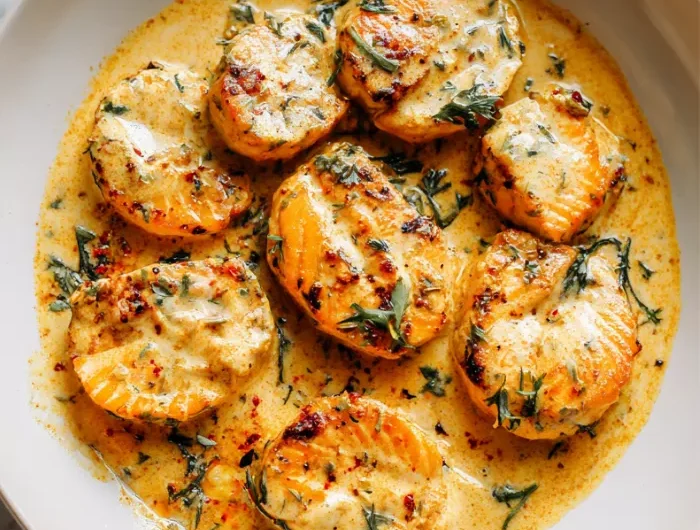
minutesLearn how to make creamy and flavorful Salmon Coconut Curry with tender salmon, fresh vegetables, and a rich coconut curry sauce. Easy, healthy, and perfect for weeknight dinners or special occasions.
Ingredients
1 lb salmon fillets, skin on or off
1 tablespoon olive oil or coconut oil
1 medium onion, finely chopped
3 cloves garlic, minced
1 tablespoon fresh ginger, grated
1-2 tablespoons red curry paste (adjust to taste)
1 can (14 oz) coconut milk
1 tablespoon fish sauce
1 teaspoon brown sugar
1 red bell pepper, sliced thinly
1 cup snap peas or green beans
Juice of 1 lime
Fresh cilantro, chopped (for garnish)
Salt and black pepper, to taste
Cooked jasmine rice, for serving
Directions
- Prepare the salmon: Pat the salmon fillets dry with paper towels and season lightly with salt and black pepper. This helps the fish sear nicely and prevents it from sticking during cooking.
- Sauté aromatics: Heat olive or coconut oil in a large skillet or pan over medium heat. Add chopped onions and cook for 2–3 minutes until softened. Stir in minced garlic and grated ginger, cooking for an additional 1 minute until fragrant.
- Add the curry paste: Stir in red curry paste and cook for 1–2 minutes, allowing the spices to bloom and release their flavors. This step intensifies the curry’s taste.
- Add coconut milk and seasonings: Pour in the coconut milk and stir until smooth. Add fish sauce and brown sugar, stirring to combine. Bring the mixture to a gentle simmer over medium heat.
- Cook vegetables: Add sliced red bell pepper and snap peas (or green beans) to the curry. Simmer for 3–4 minutes until the vegetables are tender but still crisp.
- Cook the salmon: Gently place the salmon fillets into the simmering curry, spooning some sauce over the top. Cover the pan with a lid and cook for 6–8 minutes, depending on thickness, until the salmon is cooked through and flakes easily with a fork.
- Finish with lime and garnish: Remove the pan from heat and squeeze fresh lime juice over the curry. Garnish with chopped cilantro for a burst of color and freshness.
- Serve: Serve the salmon coconut curry hot over a bed of steamed jasmine rice. Spoon extra sauce over the top for a rich, flavorful presentation.