
Quick & Easy Recipes for Everyday Cooks
Welcome to Food By Ayaka!
Salmon and Veggie Rice Stir-Fry Recipe
My mother always cooked stir-fry dishes whenever she needed something fast but still healthy. The Salmon and Veggie Rice Stir-Fry is one of those dishes that feels wholesome, comforting, and energizing all at once. She told me that the secret to a good stir-fry is timing—every ingredient goes in at the right moment so nothing turns mushy.
Growing up, I didn’t fully understand her obsession with texture, but now it is one of the things I appreciate most. The way the salmon flakes gently, the vegetables stay crisp-tender, and the rice absorbs all the flavors is something that feels nostalgic and comforting. Whenever I make this recipe, it reminds me of her kitchen, her warmth, and the beautiful simplicity of homemade meals.
I have made this recipe so many times that it has become part of my weeknight rotation. I use a mix of broccoli, carrots, and bell peppers because they cook quickly and add color, but you can use whatever vegetables you love. Always choose salmon that is fresh or properly thawed because the quality makes a difference in the texture of the final dish. I prefer using day-old rice since it fries better and doesn’t turn mushy. A splash of soy sauce and sesame oil ties everything together and gives the dish a subtle Asian flavor that tastes comforting yet light.
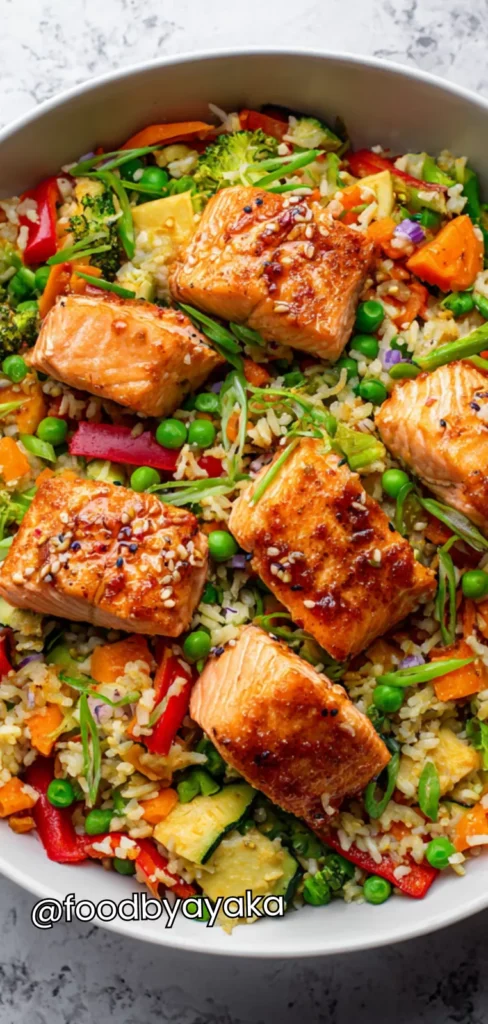
You can serve this salmon stir-fry with lemon wedges for brightness, some toasted sesame seeds for a nutty finish, and also with a side of fresh cucumber salad if you want something cool and refreshing. This dish works for lunch, dinner, or even meal prep because it holds up well for a few days in the fridge.
It’s Perfect For:
- Quick weeknight meals
- Healthy lunches
- Family dinners
- Meal prep for work
- Anyone who loves salmon and veggies
Ingredients
- 1 lb salmon fillets, cut into bite-sized cubes
- 3 cups cooked rice (preferably day-old)
- 1 cup broccoli florets
- 1 cup sliced carrots
- 1/2 cup bell peppers, sliced
- 1/2 cup green peas
- 3 tablespoons soy sauce
- 1 tablespoon oyster sauce (optional but recommended)
- 1 tablespoon sesame oil
- 1 tablespoon olive oil or vegetable oil
- 3 cloves garlic, minced
- 1 teaspoon grated ginger
- 2 eggs, lightly beaten
- Salt and black pepper to taste
- Sesame seeds or sliced green onions for garnish (optional)
Kitchen Equipment You’ll Need
- Large nonstick pan or wok
- Cutting board and sharp knife
- Mixing bowls
- Spatula or wooden spoon
- Measuring spoons
- Small whisk
How to Make Salmon and Veggie Rice Stir-Fry
Step 1
Prepare the salmon: Season the salmon cubes lightly with salt and pepper. Heat a large nonstick pan or wok over medium-high heat and drizzle in the olive oil. Once the oil is hot, add the salmon pieces in a single layer. Cook for 2–3 minutes per side, gently turning until the salmon is lightly browned and almost cooked through. Remove the salmon from the pan and set it aside—this prevents overcooking later.
Step 2
Cook the vegetables: In the same pan, add the sesame oil. Toss in the garlic and ginger, stirring for about 30 seconds until fragrant. Add the broccoli, carrots, and bell peppers. Stir-fry for 3–4 minutes until they begin to soften but still have a slight crunch. Add the green peas and continue cooking for another minute, giving everything a nice mix.
Step 3
Scramble the eggs: Push the veggies to one side of the pan to create space. Pour in the beaten eggs and let them sit for a few seconds before gently scrambling them. Once the eggs are soft and almost set, mix them into the vegetables.
Step 4
Add the rice: Add the cooked rice to the pan. Break up any clumps using a spatula and stir well so the rice mixes evenly with the veggies and eggs. Allow the rice to fry for 2–3 minutes, which helps create better texture and flavor.
Step 5
Season the stir-fry: Pour in the soy sauce and oyster sauce, stirring to evenly coat the rice and vegetables. Keep tossing everything together so the sauces blend into the rice and give it a savory, glossy finish. Let it cook for another minute or two to allow flavors to combine.
Step 6
Add the salmon back in: Gently fold the salmon pieces back into the stir-fry. Be careful not to break them apart. Cook for an additional 1–2 minutes, just until the salmon is fully heated through and the flavors meld together.
Step 7
Serve: Transfer the stir-fry to plates or bowls. Garnish with sesame seeds or sliced green onions if you want an extra pop of flavor and color. Serve hot and enjoy a balanced, comforting salmon meal.
Tips for the Perfect Salmon and Veggie Rice Stir-Fry
- Use day-old rice.
Fresh rice can turn soft and sticky during stir-frying. Day-old rice has a firmer texture, making it easier to mix with vegetables and salmon without falling apart. - Cut vegetables evenly.
Uniform pieces help everything cook at the same pace. This keeps the stir-fry crisp and prevents some veggies from becoming too soft while others remain raw. - Don’t overcrowd the pan.
Too many ingredients at once will steam instead of fry. Work in batches if needed to keep the vegetables bright and the salmon golden. - Cook salmon gently.
Salmon cooks quickly and can break apart if overhandled. Sear it briefly, remove it, and add it back at the end to keep it tender and flaky. - Season gradually.
Start with less soy sauce and add more only if needed. It’s easier to adjust the flavor slowly than to fix something overly salty. - Use high heat.
Stir-frying is all about quick cooking. High heat helps vegetables stay crisp while adding a slightly smoky flavor. - Let the rice sit before stirring.
Give the rice a moment to heat up in the pan before tossing. This helps it fry and develop a better texture without breaking apart.
Optional Ingredients
- Chili flakes for heat
- Pineapple chunks for sweetness
- Zucchini slices for extra vegetables
- A splash of fish sauce for deeper flavor
- Fresh basil or cilantro for freshness
- A drizzle of teriyaki for a sweeter glaze
How to Serve Salmon and Veggie Rice Stir-Fry
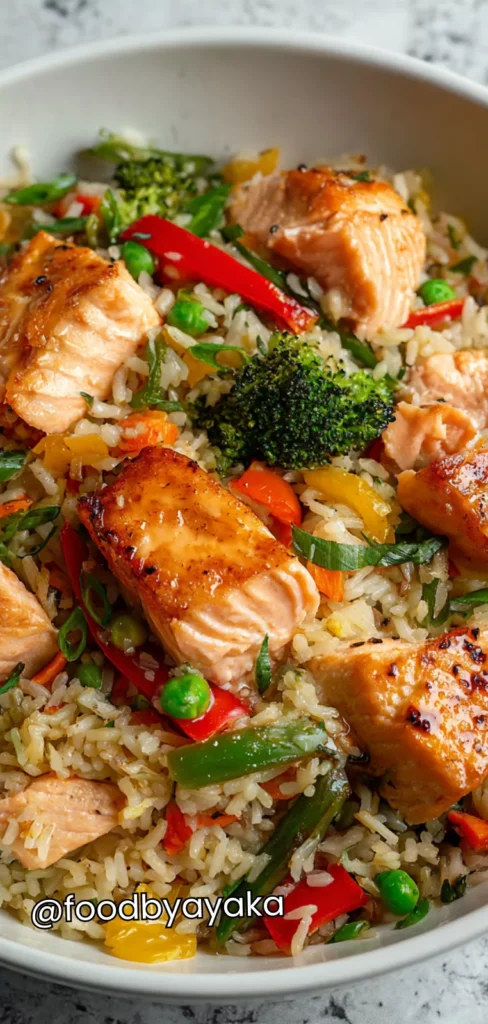
I love serving this dish warm, straight from the pan, because the salmon stays soft and flaky while the vegetables retain their crisp texture. I usually transfer everything into a large serving bowl so it looks colorful and inviting. Adding a sprinkle of sesame seeds or sliced green onions gives it that final touch of freshness and makes it feel extra special without any extra effort.
I also enjoy adding a few lemon or lime wedges on the side. A squeeze of fresh citrus brightens the flavors and balances the richness of the salmon. Sometimes, I serve it with a small side of pickled vegetables or a simple cucumber salad to add contrast in taste and texture. The combination feels refreshing and keeps the meal light, even when I’m serving a full family portion.
I like to get creative with sides too. Occasionally, I serve this stir-fry alongside steamed dumplings, miso soup, or even roasted edamame. These little extras make the meal feel more festive and satisfying. Whether it’s for a quick weeknight dinner, a meal-prep lunch, or a cozy weekend family meal, this dish adapts beautifully to any occasion. I’ve found that the more thoughtfully I serve it, the more it feels like a complete, nourishing experience.
Is Salmon and Veggie Rice Stir-Fry Healthy?
Yes, this dish is very healthy because it includes lean protein, fiber-rich vegetables, and a balanced amount of carbohydrates. Salmon contains omega-3 fatty acids, which support heart and brain health. The vegetables add essential vitamins and antioxidants that fuel your body.
The stir-fry uses minimal oil and relies on simple seasonings, making it lighter than most rice dishes. You can also adjust the ingredients to fit your dietary needs, making it a flexible and nutritious option for everyday meals. Overall, it’s filling, flavorful, and nourishing without feeling heavy.
Variations and Substitutions
- Spicy Salmon Stir-Fry
Add chili garlic sauce or sriracha while seasoning the rice. Use red chili slices for extra heat. This gives the dish a lively, bold flavor. - Teriyaki Salmon Rice
Replace soy and oyster sauce with teriyaki sauce. Add a bit of honey for sweetness. It turns the dish into a sweet-savory comfort bowl. - Low-Carb Version
Swap rice with cauliflower rice. Stir-fry quickly so it doesn’t get mushy. This version is lighter but still satisfying. - Mediterranean Twist
Use olive oil, cherry tomatoes, spinach, and lemon zest. Season with herbs instead of soy sauce. It becomes a fresh, bright rice bowl. - Coconut Rice Salmon
Cook the rice in light coconut milk. Stir-fry with green beans. This variation adds creamy notes and tropical flavor. - Gluten-Free Option
Use tamari instead of soy sauce. Keep vegetables simple and skip oyster sauce. All the flavor stays but without gluten. - Veggie-Heavy Bowl
Double the vegetables and reduce the rice. Add snow peas or mushrooms. This makes the bowl more fiber-rich and low-calorie. - Garlic Butter Salmon Rice
Sauté garlic in butter before adding rice. Add parsley and a squeeze of lemon. It gives the stir-fry a warm, buttery aroma.
How to Store & How to Reheat
Store leftovers in an airtight container and refrigerate for up to 3 days. Make sure the container is completely sealed so the rice doesn’t dry out and the vegetables stay fresh. Keep salmon pieces intact to maintain their texture.
To reheat, warm the stir-fry in a pan over medium heat with a splash of water to loosen the rice. Stir gently until heated through. You can also microwave it, but cover it loosely so the moisture stays inside. This keeps the rice fluffy and the salmon tender.
Frequently Asked Questions About Salmon and Veggie Rice Stir-Fry
Can I use fresh rice instead of day-old rice?
Yes, you can, but fresh rice tends to be softer and may clump during stir-frying. To improve the texture, spread it on a tray for a few minutes to allow excess moisture to evaporate. This helps the grains fry more evenly and keeps the stir-fry from becoming mushy, giving it a better bite.
Can I replace salmon with another protein?
Absolutely! Chicken, shrimp, or firm tofu all work beautifully in this recipe. Just adjust cooking times—chicken needs a little longer, shrimp cooks faster, and tofu should be lightly pressed and seared. Each option gives a slightly different flavor and texture, making the dish versatile for any preference.
Can I make this dish without eggs?
Yes, you can omit the eggs entirely. The stir-fry will still taste complete because the salmon provides protein and the vegetables add texture and flavor. You can even add extra tofu, edamame, or a sprinkle of nuts to boost protein content and make the meal more filling.
How can I keep the vegetables crisp?
The key is high heat and not overcrowding the pan. Stir-fry in batches if needed and cook the veggies just until they are bright in color and slightly tender. Overcooking causes them to lose their crunch, which changes the overall texture and freshness of the dish.
Salmon and Veggie Rice Stir-Fry Recipe
Course: Main DishCuisine: Asian-InspiredDifficulty: EasyServings
4
servingsPrep time
15
minutesCooking time
20
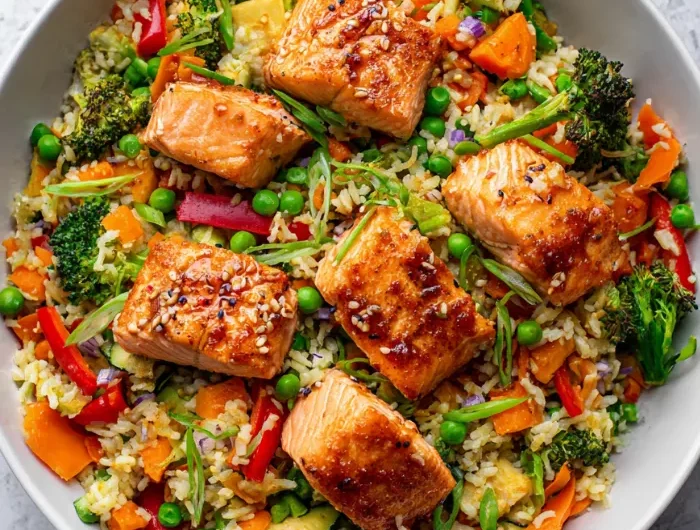
minutesTry this easy Salmon and Veggie Rice Stir-Fry recipe! Flaky salmon, colorful vegetables, and savory rice come together in a quick, healthy, and flavorful one-pan meal perfect for weeknight dinners or meal prep.
Ingredients
1 lb salmon fillets, cut into bite-sized cubes
3 cups cooked rice (preferably day-old)
1 cup broccoli florets
1 cup sliced carrots
1/2 cup bell peppers, sliced
1/2 cup green peas
3 tablespoons soy sauce
1 tablespoon oyster sauce (optional but recommended)
1 tablespoon sesame oil
1 tablespoon olive oil or vegetable oil
3 cloves garlic, minced
1 teaspoon grated ginger
2 eggs, lightly beaten
Salt and black pepper to taste
Sesame seeds or sliced green onions for garnish (optional)
Directions
- Prepare the salmon: Season the salmon cubes lightly with salt and pepper. Heat a large nonstick pan or wok over medium-high heat and drizzle in the olive oil. Once the oil is hot, add the salmon pieces in a single layer. Cook for 2–3 minutes per side, gently turning until the salmon is lightly browned and almost cooked through. Remove the salmon from the pan and set it aside—this prevents overcooking later.
- Cook the vegetables: In the same pan, add the sesame oil. Toss in the garlic and ginger, stirring for about 30 seconds until fragrant. Add the broccoli, carrots, and bell peppers. Stir-fry for 3–4 minutes until they begin to soften but still have a slight crunch. Add the green peas and continue cooking for another minute, giving everything a nice mix.
- Scramble the eggs: Push the veggies to one side of the pan to create space. Pour in the beaten eggs and let them sit for a few seconds before gently scrambling them. Once the eggs are soft and almost set, mix them into the vegetables.
- Add the rice: Add the cooked rice to the pan. Break up any clumps using a spatula and stir well so the rice mixes evenly with the veggies and eggs. Allow the rice to fry for 2–3 minutes, which helps create better texture and flavor.
- Season the stir-fry: Pour in the soy sauce and oyster sauce, stirring to evenly coat the rice and vegetables. Keep tossing everything together so the sauces blend into the rice and give it a savory, glossy finish. Let it cook for another minute or two to allow flavors to combine.
- Add the salmon back in: Gently fold the salmon pieces back into the stir-fry. Be careful not to break them apart. Cook for an additional 1–2 minutes, just until the salmon is fully heated through and the flavors meld together.
- Serve: Transfer the stir-fry to plates or bowls. Garnish with sesame seeds or sliced green onions if you want an extra pop of flavor and color. Serve hot and enjoy a balanced, comforting salmon meal.