
Quick & Easy Recipes for Everyday Cooks
Welcome to Food By Ayaka!
Protein Mango Ice Cream Recipe
My kids love ice cream, but I always worry about too much sugar and artificial flavors. In Protein Mango Ice Cream, the sweetness comes naturally from ripe mangoes, and the protein powder gives it an extra boost that keeps them full longer and supports their growing muscles. It’s creamy, soft, and melts gently on the tongue, but it’s also packed with nutrients, which makes me feel good about serving it to my family.
Protein Mango Ice Cream is a refreshing and nutritious dessert that combines the natural sweetness of ripe mangoes with the creaminess of Greek yogurt and the power of protein powder. It’s a simple recipe, yet incredibly versatile, making it perfect for kids, adults, or anyone looking for a healthy treat. The vibrant golden color and smooth texture make it not only delicious but also visually appealing, which is always a bonus when serving something homemade.
I have tried many healthy ice cream recipes over the years, but this one has become my favorite. I use Greek yogurt for creaminess, vanilla protein powder for flavor and added protein, and a touch of honey to balance the natural sweetness of mangoes. Always make sure the mangoes are ripe and juicy; this is the key to a smooth and flavorful ice cream. Blending everything thoroughly ensures a creamy texture without icy chunks, and stirring during freezing makes it extra soft.
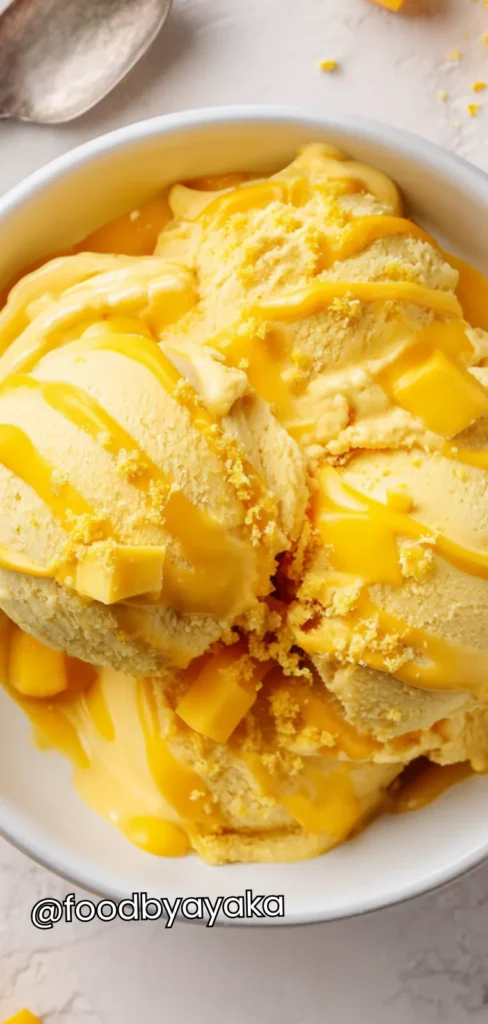
You can serve Protein Mango Ice Cream as a simple dessert on its own, some fresh fruit like berries, also with a sprinkle of granola or shredded coconut for extra texture. It can be a healthy after-school snack, a post-workout treat, or a colorful addition to a summer brunch table. The options are endless, and you can always make it more festive with a few toppings.
Its Perfect For:
- Kids’ after-school snacks
- Summer parties or picnics
- Post-workout recovery treat
- Healthy dessert without guilt
- Anyone looking for high-protein options
Ingredients
- 2 ripe mangoes, peeled and chopped (about 2 cups)
- 1 cup Greek yogurt (unsweetened or lightly sweetened)
- 1/2 cup protein powder (vanilla works best)
- 2–3 tablespoons honey or maple syrup (adjust to taste)
- 1 teaspoon vanilla extract
- 1–2 tablespoons milk (dairy or plant-based, if needed for consistency)
- Optional: a pinch of salt or lime juice to enhance flavor
Kitchen Equipment You’ll Need
- Blender or food processor (to puree the mangoes and mix ingredients)
- Freezer-safe container with lid (for freezing the ice cream)
- Spatula (to stir the mixture while freezing)
- Knife and cutting board (for peeling and chopping mangoes)
- Measuring cups and spoons (to ensure accurate ingredients)
How to Serve Protein Mango Ice Cream
Step 1
Prepare the mangoes: Peel and chop the mangoes into small cubes. Make sure they are ripe and sweet, as this will naturally add flavor and creaminess to your ice cream. Place them in a blender or food processor.
Step 2
Combine ingredients: Add Greek yogurt, protein powder, honey, and vanilla extract to the blender with the mango. Blend on high speed until smooth and creamy. Check the consistency; if it seems too thick to blend evenly, add 1–2 tablespoons of milk gradually until smooth. Taste the mixture and add a pinch of salt or a splash of lime juice to brighten the flavor if desired.
Step 3
Chill or freeze: Pour the mixture into a freezer-safe container. Smooth the top with a spatula. Cover tightly with a lid or plastic wrap. Place in the freezer for at least 3–4 hours, stirring every 30–45 minutes during the first 2 hours to prevent ice crystals and create a creamy texture.
Step 4
Serve: Once fully frozen, scoop the ice cream into bowls or cones. You can top it with fresh mango cubes, a drizzle of honey, or a sprinkle of toasted coconut for extra flavor and texture. Let it sit for a few minutes at room temperature before scooping if it’s very hard.
Step 5
Storage tips: Keep leftovers in an airtight container in the freezer for up to a week. Stir before serving if the ice cream becomes icy.
Tips for Best Protein Mango Ice Cream
- Always use ripe mangoes: The natural sweetness of ripe mangoes is essential for flavor. Unripe mangoes make the ice cream sour and grainy.
- Blend thoroughly: A smooth blend avoids chunks and gives the ice cream a creamy, silky texture. Pause and scrape down the sides if needed.
- Stir while freezing: Stir every 30–45 minutes during the first 2 hours to prevent ice crystals. This keeps the texture soft and scoopable.
- Adjust sweetness carefully: Use honey, maple syrup, or your favorite sweetener according to taste. Start small and taste as you go.
- Use full-fat yogurt for creaminess: Low-fat versions may freeze icier. Full-fat Greek yogurt gives a richer, smoother texture.
- Add a splash of milk if too thick: Dairy or plant-based milk helps the blender work better and keeps the mixture smooth.
- Enhance flavor naturally: A pinch of salt or a little lime juice brightens the mango flavor and balances sweetness beautifully.
Optional Ingredients
- Lime juice (for a tangy twist)
- Shredded coconut (for tropical flavor)
- Chia seeds (for extra fiber)
- Cinnamon (for subtle warmth)
- Fresh berries (as a topping or mix-in)
- Cocoa nibs (for a crunchy texture)
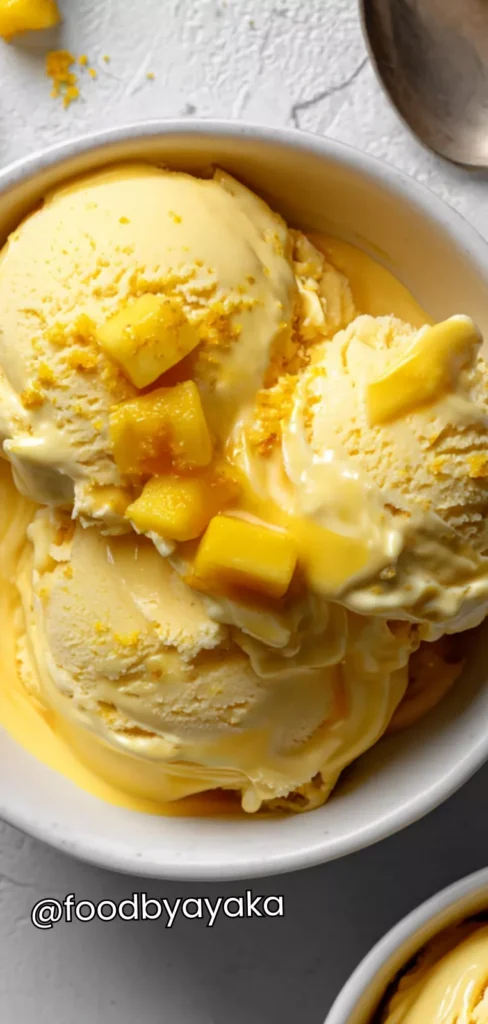
How to Serve Protein Mango Ice Cream
I usually scoop the ice cream into small bowls and add a few fresh mango cubes on top. This makes the dessert visually appealing, especially for kids, and adds a fresh burst of flavor with every bite. I sometimes drizzle a little honey or maple syrup over the top to enhance sweetness naturally, and a sprinkle of shredded coconut or crushed nuts adds a satisfying texture. This presentation is simple yet elegant and makes the ice cream feel like a special treat even on regular days.
I also like to serve it in cones for a playful twist. The creamy mango ice cream pairs perfectly with the crunch of a cone, making it fun for kids and adults alike. You can even layer it with a few berries or granola pieces to create a mini sundae effect. I often let the kids decorate their own cones, which makes snack time more interactive and enjoyable.
I often bring this ice cream to brunch or small gatherings, serving it in small cups or clear glasses. I sometimes layer it with other fruits like kiwi or strawberries, or a spoonful of yogurt for a parfait-style treat. This makes the dessert colorful, healthy, and visually appealing. I find that people are always impressed by how creamy and flavorful it is, especially because it’s made without artificial flavors or heavy sugar.
Is Protein Mango Ice Cream Healthy?
Yes! This ice cream is naturally sweetened with mangoes, which provide vitamins, fiber, and antioxidants. Greek yogurt adds protein and calcium, while the protein powder boosts the overall protein content, making it suitable as a snack or post-workout treat.
Unlike traditional ice cream, it has less sugar, no artificial flavors, and is full of wholesome ingredients. It satisfies your sweet cravings without guilt and supports a balanced diet.
Variations and Substitutions
- Banana Mango Ice Cream: Replace half of the mango with banana for a creamier texture. It adds natural sweetness and potassium.
- Coconut Mango Ice Cream: Use coconut milk instead of yogurt for a tropical flavor. Great for dairy-free versions.
- Berry Mango Ice Cream: Add blended strawberries or blueberries for a fruity twist and extra antioxidants.
- Vanilla Protein Mango Ice Cream: Stick with vanilla protein powder for a subtle, creamy flavor that highlights mango.
- Chocolate Mango Ice Cream: Mix in 1 tablespoon of cocoa powder for a chocolate-mango fusion. Delicious for chocolate lovers.
- Spiced Mango Ice Cream: Add a pinch of cinnamon or cardamom for a warm, fragrant twist.
- Mint Mango Ice Cream: Blend in a few fresh mint leaves for a refreshing flavor. Perfect for hot days.
- Nutty Mango Ice Cream: Top with chopped nuts like almonds or cashews for extra crunch and healthy fats.
How to Store, How to Reheat
Protein Mango Ice Cream should be stored in an airtight container in the freezer. It keeps well for up to one week. Make sure the lid is tight to prevent freezer burn and maintain creamy texture.
If the ice cream becomes too hard, simply let it sit at room temperature for 5–10 minutes before scooping. You can also stir gently with a spatula to soften. Avoid microwaving, as this changes the texture and may make it icy.
Frequently Asked Questions About Protein Mango Ice Cream
Can I make this dairy-free?
Yes! You can replace Greek yogurt with coconut yogurt, almond yogurt, or any plant-based yogurt. The texture may be slightly different—slightly less creamy—but the flavor is still delicious and naturally sweet. For extra creaminess, use full-fat versions of plant-based yogurt.
Can I use frozen mangoes instead of fresh ones?
Absolutely! Frozen mangoes work really well and can help create a thicker, creamier texture. Just thaw slightly before blending or add a splash of milk to help it puree smoothly. Frozen mangoes are also convenient when fresh mangoes are out of season.
How long does it take to freeze completely?
It usually takes about 3–4 hours to fully freeze. Stirring every 30–45 minutes during the first 2 hours prevents ice crystals and keeps the texture creamy. If you’re short on time, using an ice cream maker can cut down the waiting period.
Can I use sweeteners other than honey?
Yes! Maple syrup, agave, or even a small amount of stevia or monk fruit sweetener works. Adjust the amount based on your preferred sweetness. Keep in mind that liquid sweeteners like maple syrup add moisture, which can slightly affect freezing, so you may need to stir more often. You can also combine a natural sweetener with a tiny pinch of salt to enhance the flavor.
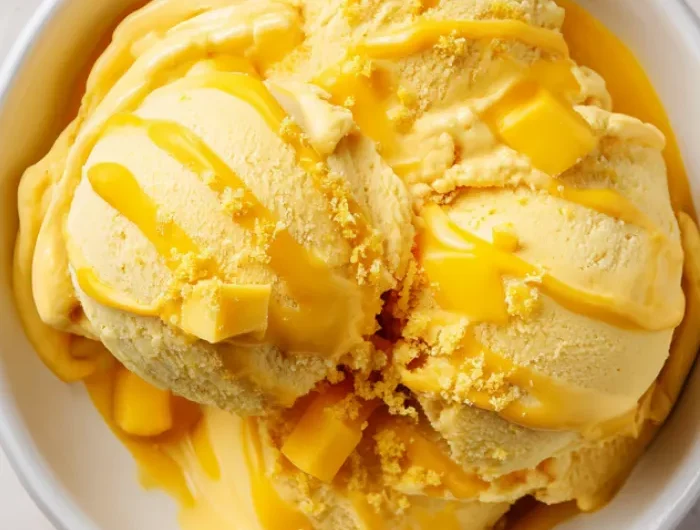
Protein Mango Ice Cream Recipe
Course: DessertCuisine: AmericanDifficulty: EasyServings
4
servingsPrep time
10
minutesFreezing time
4
hoursDiscover a healthy and creamy Protein Mango Ice Cream recipe! Perfect for kids, post-workout snacks, or summer desserts. Easy, natural, and packed with flavor.
Ingredients
2 ripe mangoes, peeled and chopped (about 2 cups)
1 cup Greek yogurt (unsweetened or lightly sweetened)
1/2 cup protein powder (vanilla works best)
2–3 tablespoons honey or maple syrup (adjust to taste)
1 teaspoon vanilla extract
1–2 tablespoons milk (dairy or plant-based, if needed for consistency)
Optional: a pinch of salt or lime juice to enhance flavor
Directions
- Prepare the mangoes: Peel and chop the mangoes into small cubes. Make sure they are ripe and sweet, as this will naturally add flavor and creaminess to your ice cream. Place them in a blender or food processor.
- Combine ingredients: Add Greek yogurt, protein powder, honey, and vanilla extract to the blender with the mango. Blend on high speed until smooth and creamy. Check the consistency; if it seems too thick to blend evenly, add 1–2 tablespoons of milk gradually until smooth. Taste the mixture and add a pinch of salt or a splash of lime juice to brighten the flavor if desired.
- Chill or freeze: Pour the mixture into a freezer-safe container. Smooth the top with a spatula. Cover tightly with a lid or plastic wrap. Place in the freezer for at least 3–4 hours, stirring every 30–45 minutes during the first 2 hours to prevent ice crystals and create a creamy texture.
- Serve: Once fully frozen, scoop the ice cream into bowls or cones. You can top it with fresh mango cubes, a drizzle of honey, or a sprinkle of toasted coconut for extra flavor and texture. Let it sit for a few minutes at room temperature before scooping if it’s very hard.
- Storage tips: Keep leftovers in an airtight container in the freezer for up to a week. Stir before serving if the ice cream becomes icy.