
Quick & Easy Recipes for Everyday Cooks
Welcome to Food By Ayaka!
Pasta Pomodoro Recipe
I like creamy pasta sometimes, but Pasta Pomodoro in its pure form is fresh and light and beautifully balanced. The sweetness of the tomatoes, the warmth of garlic, and the fragrance of basil come together in the most comforting way. It doesn’t feel heavy, yet it satisfies completely.
Pasta Pomodoro is one of those simple dishes that proves less is truly more. Made with pasta, tomatoes, olive oil, garlic, and fresh basil, it celebrates fresh ingredients without heavy sauces or complicated steps. This classic Italian recipe is comforting, light, and full of bright tomato flavor. It’s the kind of meal you can make on a busy weekday but still feel like you’re sitting in a cozy little restaurant in Rome.
I have made this recipe so many times in my kitchen. I use good quality canned tomatoes or fresh ripe tomatoes when they are in season. I always choose extra virgin olive oil and fresh basil because they truly make a difference in flavor. Simple ingredients matter so much in this recipe.
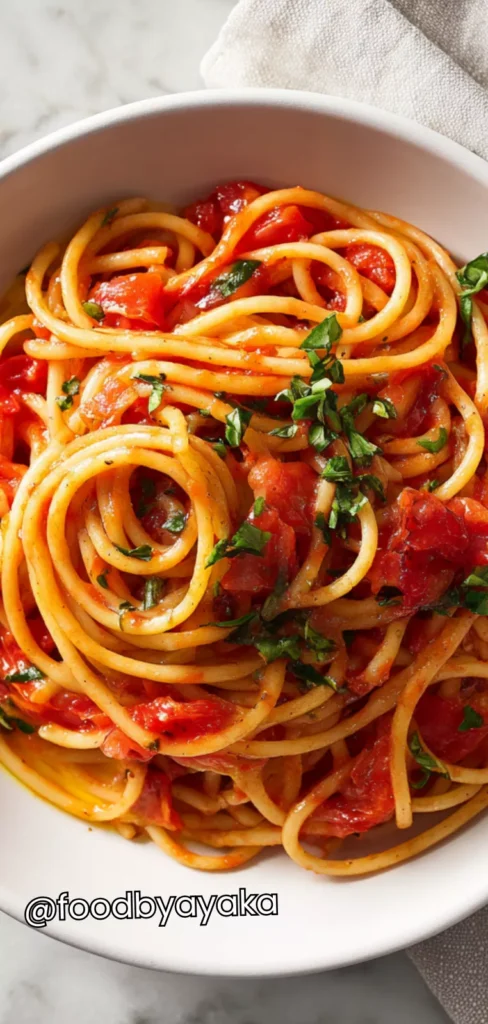
You can serve it as a main dish for lunch or dinner, some garlic bread on the side, also with a fresh green salad or roasted vegetables for a complete meal.
Its Perfect For:
- Busy weeknight dinners
- Light summer meals
- Family-friendly comfort food
- Meatless Monday ideas
- Romantic homemade dinner
Ingredients
- 12 oz spaghetti or linguine
- 2 tablespoons olive oil
- 4 cloves garlic, minced
- 1 can (28 oz) whole peeled tomatoes (San Marzano preferred)
- 1/2 teaspoon salt (or to taste)
- 1/2 teaspoon black pepper
- 1 teaspoon sugar (optional, to balance acidity)
- 1/4 teaspoon red pepper flakes (optional)
- 1/4 cup fresh basil leaves, chopped
- 1/2 cup freshly grated Parmesan cheese
- Extra basil leaves, for garnish
Kitchen Equipment You’ll Need
- Large pot for boiling pasta
- Large skillet or sauté pan
- Wooden spoon or spatula
- Colander for draining pasta
- Sharp knife and cutting board
- Measuring cups and spoons
- Cheese grater
How to Make Pasta Pomodoro
Step 1
Cook the pasta: Bring a large pot of salted water to a rolling boil. Add the spaghetti and cook according to package instructions until al dente, stirring occasionally to prevent sticking. Before draining, carefully reserve about 1/2 cup of the starchy pasta water. Drain the pasta and set it aside, keeping it warm while you prepare the sauce.
Step 2
Prepare the tomato sauce: Heat olive oil in a large skillet over medium heat. Add the minced garlic and sauté gently for about 1 minute, stirring constantly so it becomes fragrant without browning or burning. Pour in the whole peeled tomatoes with their juices. Using a wooden spoon, carefully crush the tomatoes directly in the pan until you achieve a chunky but smooth sauce texture.
Step 3
Season and simmer: Add salt, black pepper, sugar (if using), and red pepper flakes. Stir everything together well. Lower the heat and allow the sauce to simmer gently for 12–15 minutes, stirring occasionally. This slow simmer helps deepen the flavor and slightly thicken the sauce. If it becomes too thick, add a splash of the reserved pasta water to loosen it while maintaining a silky consistency.
Step 4
Combine pasta and sauce: Add the drained pasta directly into the skillet with the sauce. Toss thoroughly using tongs so every strand is evenly coated. Gradually add a few tablespoons of the reserved pasta water if needed to help the sauce cling beautifully to the pasta. Stir in the chopped basil and half of the Parmesan cheese, allowing it to melt slightly into the sauce.
Step 5
Finish and serve: Remove the skillet from heat and divide the pasta into serving bowls. Sprinkle the remaining Parmesan cheese over the top and garnish with fresh basil leaves. Serve immediately while hot, optionally finishing with a light drizzle of olive oil for extra richness.
Tips for the Best Pasta Pomodoro
- Salt your pasta water well.
The water should taste slightly salty like the sea.
This is your only chance to season the pasta itself.
It makes a big difference in the final flavor. - Do not overcook the pasta.
Cook it until just al dente, with a slight bite.
The pasta will continue cooking in the sauce.
This keeps the texture perfect and not mushy. - Use good quality tomatoes.
San Marzano tomatoes are ideal if available.
If using fresh tomatoes, choose ripe and sweet ones.
The tomatoes are the heart of this dish. - Let the sauce simmer gently.
Do not rush this step.
A slow simmer develops deeper flavor.
It also helps the sauce thicken naturally. - Reserve pasta water.
Always save a small cup before draining.
The starchy water helps bind the sauce.
It creates a silky and smooth finish. - Add basil at the end.
Fresh basil should not cook too long.
Stir it in just before serving.
This keeps its aroma bright and fresh. - Finish with olive oil.
A small drizzle at the end adds richness.
It enhances the tomato flavor beautifully.
Simple but very effective.
Optional Ingredients
- Red pepper flakes for a little heat
- A pinch of sugar to balance acidity
- Fresh mozzarella cubes for creaminess
- Grated Parmesan or Pecorino cheese
- Cherry tomatoes for extra freshness
- A splash of balsamic glaze for depth
How to Serve Pasta Pomodoro?
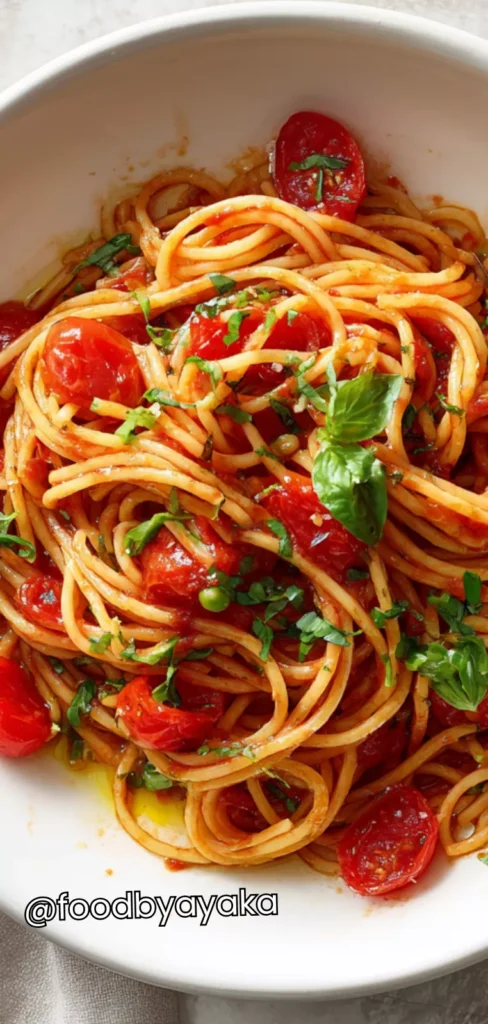
I love serving Pasta Pomodoro in wide shallow bowls because it allows the sauce to spread evenly and coat every strand of pasta beautifully. I always finish it with freshly grated Parmesan cheese and a few whole basil leaves for a fresh and elegant presentation. A light drizzle of high-quality olive oil right before serving adds shine and enhances the natural tomato flavor.
I sometimes serve it with warm garlic bread, toasted ciabatta, or even a simple focaccia on the side. The bread is perfect for soaking up the extra sauce left at the bottom of the bowl, and nothing goes to waste. When I want to make the table feel a little more special, I also add a small dish of olive oil with cracked pepper for dipping.
I also enjoy pairing it with a crisp green salad tossed in lemon vinaigrette. The fresh crunch of lettuce balances the soft texture of the pasta so nicely. Sometimes I add cucumbers, cherry tomatoes, and shaved Parmesan to the salad for extra flavor and texture.
I like serving it family-style as well, placing the pasta in a large serving dish in the center of the table. Everyone can help themselves, which makes dinner feel warm and inviting. It’s such a simple dish, but when presented beautifully, it feels elegant and comforting at the same time.
Is Pasta Pomodoro Healthy?
Yes, Pasta Pomodoro can be a healthy meal when made with fresh ingredients. It contains tomatoes rich in antioxidants, olive oil with healthy fats, and basil packed with nutrients. It is lighter than cream-based pasta dishes.
It becomes even healthier if you use whole wheat pasta and reduce the cheese. The recipe is naturally vegetarian and can easily be made vegan by skipping the cheese. When enjoyed in balanced portions, it is both nourishing and satisfying.
Variations and Substitutions
- Whole Wheat Version
Use whole wheat spaghetti instead of regular pasta.
It adds fiber and a nutty flavor.
The texture is slightly firmer but still delicious.
Perfect for a healthier option. - Gluten-Free Version
Choose your favorite gluten-free pasta.
Cook it carefully according to package instructions.
The sauce remains exactly the same.
Great for those with gluten sensitivity. - Spicy Pomodoro
Add extra red pepper flakes.
You can also add a little chili paste.
It gives warmth without overpowering the tomatoes.
Ideal if you enjoy heat. - Creamy Pomodoro
Stir in a splash of heavy cream.
It softens the tomato acidity.
The sauce becomes silky and richer.
Still simple but slightly indulgent. - Fresh Tomato Version
Use chopped ripe fresh tomatoes.
Peel them first for smoother texture.
Simmer a little longer to reduce water.
Best during summer season. - Protein Boost Version
Add grilled chicken or shrimp.
You can also mix in white beans.
It makes the dish more filling.
Perfect for dinner. - Mozzarella Pomodoro
Add small mozzarella balls.
Let them melt slightly in the sauce.
It creates creamy pockets in every bite.
Kids especially love this version. - Roasted Garlic Version
Use roasted garlic instead of raw.
It gives a sweeter and deeper flavor.
The sauce tastes richer and softer.
Great for special occasions.
How to Store and How to Reheat
To store Pasta Pomodoro, allow it to cool completely before placing it in an airtight container. Keep it in the refrigerator for up to 3 days. If possible, store the pasta and sauce separately to maintain better texture and prevent the pasta from absorbing too much liquid.
To reheat, place the pasta in a pan over low heat and add a splash of water or olive oil to loosen the sauce. Stir gently until warmed through. You can also microwave it in short intervals, stirring in between to prevent drying out and to ensure even heating.
Frequently Asked Questions About Pasta Pomodoro
Can I make Pasta Pomodoro ahead of time?
Yes, you can prepare the tomato sauce in advance and store it in the refrigerator for up to 3 days. The flavor actually deepens as it sits, which makes it even more delicious. When ready to serve, simply cook fresh pasta and toss it with the reheated sauce for the best texture and freshness.
Can I freeze the sauce?
Yes, the tomato sauce freezes very well and keeps its flavor beautifully. Let it cool completely before placing it in airtight freezer-safe containers. It can be frozen for up to 3 months, and you only need to thaw overnight in the refrigerator and reheat gently on the stove before using.
What pasta shape works best for Pasta Pomodoro?
Spaghetti is the most traditional choice and gives a classic presentation. Linguine also works wonderfully because it holds the sauce nicely. If you prefer short pasta, penne or rigatoni are excellent options since they trap the sauce inside and deliver flavor in every bite.
How do I make the sauce thicker and richer?
If your sauce seems too thin, let it simmer uncovered for a few extra minutes to reduce naturally. Avoid adding too much pasta water at once; instead, add it gradually as needed. For a richer taste and smoother texture, you can stir in a small knob of butter or finish with an extra drizzle of olive oil before serving.
Pasta Pomodoro Recipe
Course: Main CourseCuisine: ItalianDifficulty: EasyServings
4
servingsPrep time
10
minutesCooking time
20
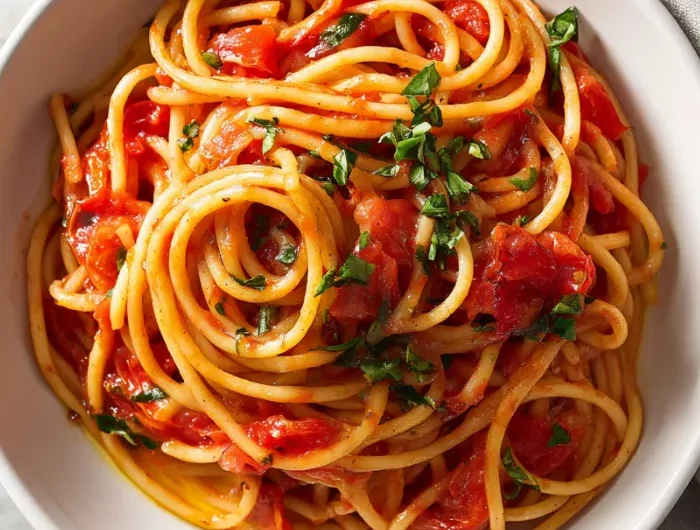
minutesPasta Pomodoro is simple, comforting, and full of fresh flavor. With just a few quality ingredients and a little care, you can create a beautiful homemade meal that feels both effortless and special.
Ingredients
12 oz spaghetti or linguine
2 tablespoons olive oil
4 cloves garlic, minced
1 can (28 oz) whole peeled tomatoes (San Marzano preferred)
1/2 teaspoon salt (or to taste)
1/2 teaspoon black pepper
1 teaspoon sugar (optional, to balance acidity)
1/4 teaspoon red pepper flakes (optional)
1/4 cup fresh basil leaves, chopped
1/2 cup freshly grated Parmesan cheese
Extra basil leaves, for garnish
Directions
- Cook the pasta: Bring a large pot of salted water to a rolling boil. Add the spaghetti and cook according to package instructions until al dente, stirring occasionally to prevent sticking. Before draining, carefully reserve about 1/2 cup of the starchy pasta water. Drain the pasta and set it aside, keeping it warm while you prepare the sauce.
- Prepare the tomato sauce: Heat olive oil in a large skillet over medium heat. Add the minced garlic and sauté gently for about 1 minute, stirring constantly so it becomes fragrant without browning or burning. Pour in the whole peeled tomatoes with their juices. Using a wooden spoon, carefully crush the tomatoes directly in the pan until you achieve a chunky but smooth sauce texture.
- Season and simmer: Add salt, black pepper, sugar (if using), and red pepper flakes. Stir everything together well. Lower the heat and allow the sauce to simmer gently for 12–15 minutes, stirring occasionally. This slow simmer helps deepen the flavor and slightly thicken the sauce. If it becomes too thick, add a splash of the reserved pasta water to loosen it while maintaining a silky consistency.
- Combine pasta and sauce: Add the drained pasta directly into the skillet with the sauce. Toss thoroughly using tongs so every strand is evenly coated. Gradually add a few tablespoons of the reserved pasta water if needed to help the sauce cling beautifully to the pasta. Stir in the chopped basil and half of the Parmesan cheese, allowing it to melt slightly into the sauce.
- Finish and serve: Remove the skillet from heat and divide the pasta into serving bowls. Sprinkle the remaining Parmesan cheese over the top and garnish with fresh basil leaves. Serve immediately while hot, optionally finishing with a light drizzle of olive oil for extra richness.