
Quick & Easy Recipes for Everyday Cooks
Welcome to Food By Ayaka!
Korean Beef Bibim Noodles Recipe
Making these noodles may seem tricky if you’re not used to Korean cooking, but honestly, it’s simple. The key is prepping your vegetables ahead and having all your sauces measured. In reality, the cooking itself is fast, and in about 30 minutes, you have a meal that’s restaurant-quality and bursting with flavor. If you love quick, flavorful, and comforting meals, Korean Beef Bibim Noodles are an absolute must-try. This dish is vibrant, spicy, and perfectly balanced, combining tender ground beef, chewy noodles, and fresh vegetables all tossed in a savory-sweet gochujang sauce.
I have made this dish countless times for my family and friends, and I use fresh ingredients whenever I can. Always, I make sure the vegetables are crisp and colorful, and the beef is tender and well-seasoned. The gochujang sauce is the heart of the dish, and I always adjust it slightly for sweetness or spice depending on my mood. It’s a simple combination, but the balance of flavors feels complex and satisfying.
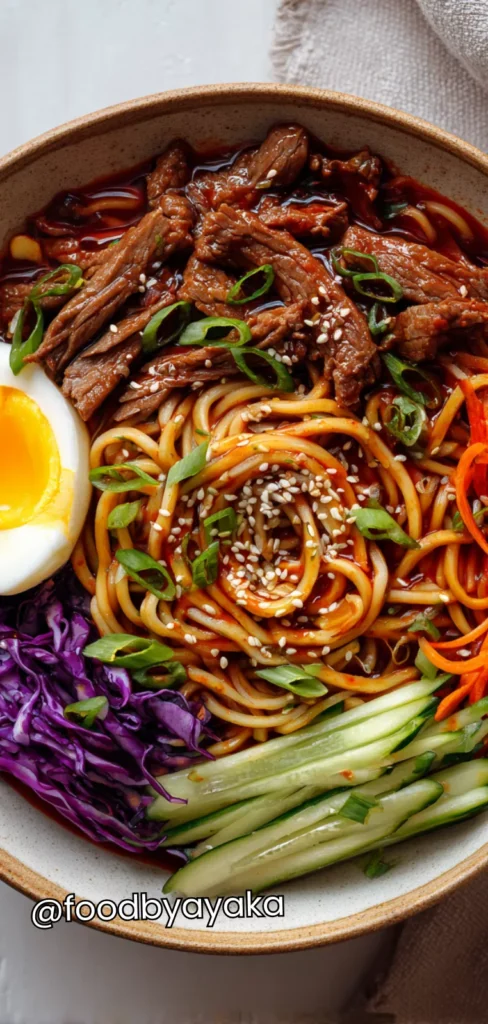
You can serve these noodles on their own for a light dinner, with a soft-boiled egg on top for extra protein, some kimchi for a traditional Korean touch, or also with extra sesame seeds and green onions for texture. It’s versatile enough to accompany a light soup or even a small salad on the side.
Its Perfect For:
- Quick weeknight dinners when you don’t have much time to cook.
- Lunchboxes or meal prep that stays flavorful for a few days.
- Family gatherings where everyone wants something tasty and filling.
- Anyone craving a dish that’s sweet, savory, and a little spicy.
- Casual dinner parties when you want something impressive but simple.
Ingredients
- 8 oz (225 g) noodles (soba, udon, or spaghetti work well)
- 1 lb (450 g) ground beef
- 2 tablespoons soy sauce
- 1 tablespoon gochujang (Korean chili paste)
- 1 tablespoon sesame oil
- 2 teaspoons sugar or honey
- 3 cloves garlic, minced
- 1/2 teaspoon ground black pepper
- 2 green onions, sliced thinly
- 1 small cucumber, julienned
- 1 medium carrot, julienned
- 1 tablespoon toasted sesame seeds
Optional Garnishes:
- Soft-boiled egg
- Kimchi
- Extra gochujang on the side
Kitchen Equipment You’ll Need
- Large pot for boiling noodles
- Large skillet or frying pan for cooking beef
- Cutting board and knife for vegetables
- Measuring spoons and cups
- Mixing bowls
- Tongs or chopsticks for tossing noodles
How to make Korean Beef Bibim Noodles
Step 1
Cook the noodles: Bring a large pot of water to a boil and cook the noodles according to package instructions until just tender. Drain and rinse under cold water to stop cooking, then drizzle lightly with sesame oil to prevent sticking. Set aside.
Step 2
Prepare the beef: In a large skillet or frying pan, heat a teaspoon of sesame oil over medium heat. Add the minced garlic and sauté for 30 seconds until fragrant. Add the ground beef and cook, breaking it apart with a spatula, until fully browned and slightly caramelized.
Step 3
Season the beef: Stir in soy sauce, gochujang, sugar (or honey), and black pepper. Cook for another 2-3 minutes, allowing the flavors to meld and the sauce to slightly thicken. Taste and adjust seasoning—if you like it spicier, add a little extra gochujang.
Step 4
Assemble the noodles: Divide the cooked noodles into serving bowls. Top each bowl with the seasoned beef, julienned cucumber, carrot, and sliced green onions. Sprinkle with toasted sesame seeds for a nutty finish. For an extra Korean touch, you can add a soft-boiled egg or a side of kimchi.
Step 5
Serve and mix: Before eating, mix all the ingredients together so that the noodles are fully coated with the savory, spicy beef and gochujang sauce. Serve immediately while fresh and slightly warm, enjoying the perfect balance of sweet, savory, and spicy flavors in every bite.
Tips for Best Korean Beef Bibim Noodles
- Cook noodles al dente: Slightly undercooked noodles hold the sauce better and have a better texture. Rinse under cold water to stop cooking and prevent sticking.
- Prep veggies first: Julienne carrots and cucumbers before cooking the beef; it saves time and keeps everything fresh and crisp.
- Use fresh garlic: Minced fresh garlic is always better than pre-minced—it adds real flavor and aroma.
- Taste as you go: Adjust the gochujang sauce for sweetness, salt, or heat; small tweaks make a big difference.
- Don’t overcook beef: Ground beef cooks quickly; overcooking dries it out. Keep it tender and slightly caramelized.
- Add sesame oil last: Drizzle it at the end to keep its nutty flavor bold and fragrant.
- Mix well before serving: Toss noodles, beef, and vegetables together so each bite has a perfect flavor balance.
Optional Ingredients
- Soft-boiled or fried egg
- Kimchi for tangy flavor
- Mushrooms, sliced and sautéed
- Bell peppers for extra crunch
- Spinach or bok choy, lightly blanched
- Extra chili flakes if you like it spicier
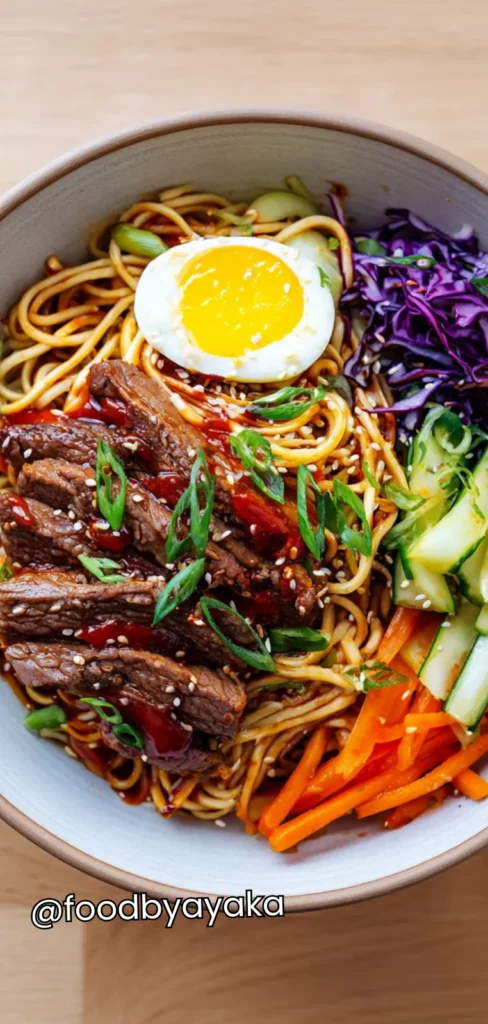
How to Serve Korean Beef Bibim Noodles
I like to serve these noodles in wide, shallow bowls so that the colors and textures of each ingredient can really shine. I start with a base of perfectly cooked noodles, then spoon the seasoned beef right in the center. Next, I arrange the julienned carrots and cucumbers around the beef like a rainbow, adding thin slices of green onions for a fresh touch. Sprinkling toasted sesame seeds on top not only makes it look pretty but adds a subtle nutty crunch with every bite.
I always like to add a soft-boiled egg sliced in half or a fried egg on top—it adds a creamy richness that balances the spiciness of the gochujang sauce. If you want a more traditional Korean experience, I place a small portion of kimchi on the side for tang, crunch, and extra flavor. You can also drizzle a little extra sesame oil or gochujang over the noodles before serving if someone prefers bolder flavors.
I often suggest letting everyone mix their own bowls at the table so each bite is perfectly coated in sauce and vegetables. It makes it more interactive and fun, especially for kids or friends trying Korean food for the first time. For presentation, I like serving with chopsticks for a fun touch, but a fork works perfectly if preferred. You can even garnish with fresh herbs like cilantro or small strips of seaweed for an extra flavorful, Instagram-worthy dish.
Is Korean Beef Bibim Noodles Healthy?
Yes! Korean Beef Bibim Noodles can be very healthy if you use lean ground beef or even substitute with turkey or tofu. The dish has a good balance of protein, carbs, and vegetables, making it a complete meal in a bowl.
It’s also lower in fat than creamy pasta dishes because the sauce is made from gochujang, soy sauce, and a small amount of sesame oil. With fresh vegetables and optional toppings like eggs or kimchi, it’s filling, satisfying, and full of vitamins and minerals.
Variations and Substitutions
- Vegetarian: Replace beef with firm tofu or tempeh, marinated in soy sauce and gochujang. Cook until golden and slightly crispy.
- Spicy: Add extra gochujang or red pepper flakes for more heat. Balance with a small drizzle of honey to prevent overwhelming spiciness.
- Low-carb: Swap noodles for zucchini noodles or shirataki noodles for a lighter option. Add extra vegetables to maintain volume.
- Seafood: Use shrimp or scallops instead of beef. Sauté in sesame oil with garlic and gochujang sauce.
- Sweetened: Add a teaspoon of brown sugar or maple syrup to the sauce for a sweeter, more caramelized flavor.
- Nutty: Top with crushed peanuts or cashews for a crunchy texture and added flavor.
- Cold version: Chill the noodles and vegetables for a refreshing summer dish, perfect as a light lunch.
- Mixed greens: Toss noodles with spinach, arugula, or lettuce to make a noodle salad version that’s fresh and filling.
How to Store, How to Reheat
Store leftover noodles in an airtight container in the refrigerator for up to 3 days. Keep the sauce separate if possible to prevent the noodles from getting soggy. Prepped vegetables should be stored separately if you want to maintain crunch.
To reheat, warm the beef and sauce in a skillet over medium heat for 2-3 minutes. Add the noodles and toss quickly to coat. If serving cold, skip heating and mix everything directly. Always garnish with fresh vegetables and sesame seeds before eating for the best texture and flavor.
Frequently Asked Questions About Korean Beef Bibim Noodles
Can I use spaghetti or other types of noodles?
Yes, you can use spaghetti, linguine, or even rice noodles if you prefer. While the texture won’t be exactly like Korean noodles, it will still absorb the sauce beautifully. Make sure to cook the noodles al dente, rinse under cold water to stop cooking, and toss lightly with sesame oil to prevent sticking.
How spicy is this dish?
The spiciness is mild to medium depending on the amount of gochujang you add. If you prefer a stronger kick, you can sprinkle extra chili flakes or a touch of sriracha. For children or those sensitive to spice, reduce the gochujang slightly or add a little honey to balance the heat. The flavor remains rich even with less spice.
Can I make this dish ahead of time for meal prep?
Absolutely! You can prepare the beef and noodles in advance and store them separately. Keep vegetables uncooked or lightly blanched to maintain their crunch. Assemble the bowls just before eating for the freshest taste and best texture, and the noodles will stay perfectly chewy.
Can I freeze Korean Beef Bibim Noodles?
Freezing the fully assembled dish is not ideal because the noodles may become mushy. However, you can freeze the cooked beef and sauce separately in an airtight container. When ready to eat, thaw and reheat the beef, then toss with freshly cooked noodles and fresh vegetables for a perfect meal.
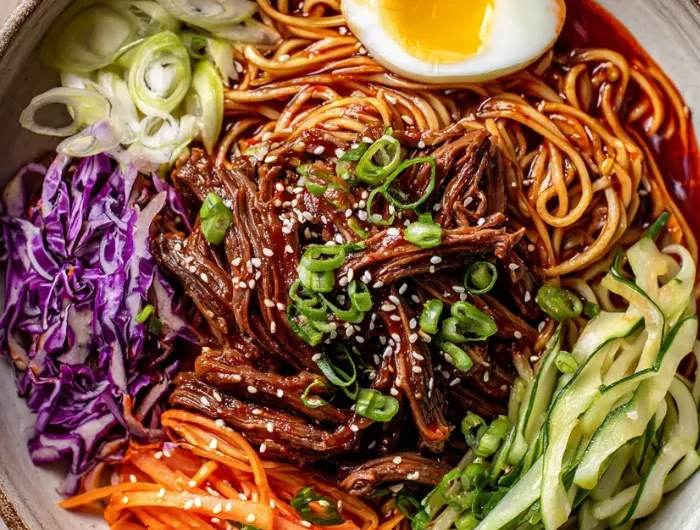
Korean Beef Bibim Noodles Recipe
Course: Main DishCuisine: KoreanDifficulty: EasyServings
4
servingsPrep time
20
minutesCooking time
15
minutesDiscover the ultimate Korean Beef Bibim Noodles recipe! Quick, easy, and full of flavor, this spicy-sweet noodle bowl with tender beef, fresh vegetables, and gochujang sauce is perfect for weeknight dinners, meal prep, or family-friendly meals.
Ingredients
8 oz (225 g) noodles (soba, udon, or spaghetti work well)
1 lb (450 g) ground beef
2 tablespoons soy sauce
1 tablespoon gochujang (Korean chili paste)
1 tablespoon sesame oil
2 teaspoons sugar or honey
3 cloves garlic, minced
1/2 teaspoon ground black pepper
2 green onions, sliced thinly
1 small cucumber, julienned
1 medium carrot, julienned
1 tablespoon toasted sesame seeds
Optional Garnishes:
Soft-boiled egg
Kimchi
Extra gochujang on the side
Directions
- Cook the noodles: Bring a large pot of water to a boil and cook the noodles according to package instructions until just tender. Drain and rinse under cold water to stop cooking, then drizzle lightly with sesame oil to prevent sticking. Set aside.
- Prepare the beef: In a large skillet or frying pan, heat a teaspoon of sesame oil over medium heat. Add the minced garlic and sauté for 30 seconds until fragrant. Add the ground beef and cook, breaking it apart with a spatula, until fully browned and slightly caramelized.
- Season the beef: Stir in soy sauce, gochujang, sugar (or honey), and black pepper. Cook for another 2-3 minutes, allowing the flavors to meld and the sauce to slightly thicken. Taste and adjust seasoning—if you like it spicier, add a little extra gochujang.
- Assemble the noodles: Divide the cooked noodles into serving bowls. Top each bowl with the seasoned beef, julienned cucumber, carrot, and sliced green onions. Sprinkle with toasted sesame seeds for a nutty finish. For an extra Korean touch, you can add a soft-boiled egg or a side of kimchi.
- Serve and mix: Before eating, mix all the ingredients together so that the noodles are fully coated with the savory, spicy beef and gochujang sauce. Serve immediately while fresh and slightly warm, enjoying the perfect balance of sweet, savory, and spicy flavors in every bite.