
Quick & Easy Recipes for Everyday Cooks
Welcome to Food By Ayaka!
High-Protein Buddha Bowl Recipe
I like quick meals that look beautiful on the plate, but in real life is often busy and unpredictable, and that’s where this Buddha bowl shines. It comes together easily, doesn’t require complicated cooking methods, and is perfect for meal prep or a fresh lunch when you want something light but still filling. This High-Protein Buddha Bowl is one of those meals I always come back to when I want something balanced, colorful, and satisfying without feeling heavy.
It combines plant-based proteins, fresh vegetables, healthy fats, and a wholesome grain base, creating a bowl that feels nourishing in every bite. What I personally love about this recipe is how flexible it is—you can adjust it depending on what you have in your kitchen while still keeping it nutrient-dense and delicious.
I have made this bowl countless times during busy weeks, and I use simple ingredients like quinoa, chickpeas, and fresh vegetables always. I also keep a good dressing on hand because it brings everything together and adds that creamy, tangy flavor that makes the bowl irresistible.
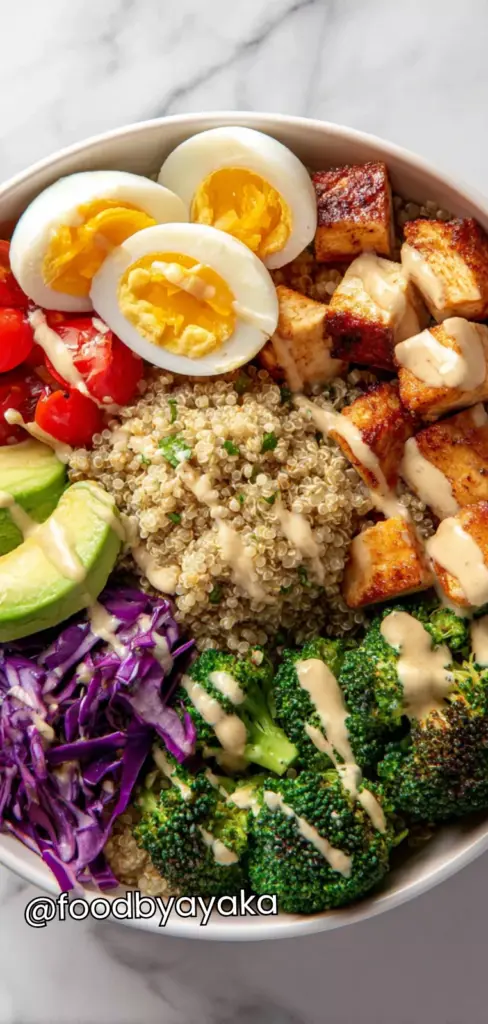
You can serve this bowl warm or slightly chilled, some fresh herbs on top, also with extra lemon wedges or a side of yogurt-based sauce for added creaminess and brightness.
Its Perfect For:
- Healthy weekday lunches
- Post-workout meals
- Meal prep for busy schedules
- Light but filling dinners
- Vegetarian or flexitarian diets
Ingredients
- 1 cup cooked quinoa
- 1 cup chickpeas (cooked or canned, drained and rinsed)
- 1 cup cooked chicken breast, sliced (or tofu for vegetarian option)
- 1/2 cup steamed broccoli florets
- 1/2 cup shredded carrots
- 1/2 avocado, sliced
- 1/4 cup cucumber, sliced
- 2 tablespoons olive oil
- 1 tablespoon lemon juice
- 1 tablespoon tahini
- 1 teaspoon honey or maple syrup
- 1 clove garlic, minced
- Salt and black pepper to taste
- Optional toppings: sesame seeds, chopped parsley, chili flakes
Kitchen Equipment You’ll Need
- Medium saucepan (for quinoa or grains)
- Mixing bowls
- Cutting board
- Sharp knife
- Steamer or skillet (for vegetables)
- Measuring spoons and cups
- Whisk or fork (for dressing)
- Serving bowls
How to make High-Protein Buddha Bowl
Step 1
Prepare the base: Start by cooking the quinoa according to package instructions if not already prepared. Once cooked, fluff it with a fork and let it cool slightly before assembling the bowl so it doesn’t wilt the fresh ingredients.
Step 2
Prepare the protein: If using chicken, make sure it is already cooked and sliced into strips. For extra flavor, you can lightly season it with salt, pepper, and a squeeze of lemon juice. If using tofu, pan-fry or bake it until golden and slightly crispy on the edges.
Step 3
Warm and prep vegetables: Steam or lightly sauté the broccoli until tender but still vibrant green. Slice the carrots, cucumber, and avocado into bite-sized pieces so they are easy to eat and layer in the bowl.
Step 4
Assemble the bowl: Divide the quinoa evenly between serving bowls as the base. Arrange the chickpeas, chicken (or tofu), broccoli, carrots, cucumber, and avocado neatly on top, grouping each ingredient for a visually appealing presentation.
Step 5
Make the dressing: In a small bowl, whisk together olive oil, lemon juice, tahini, honey (or maple syrup), minced garlic, salt, and black pepper. Mix until smooth and creamy. If the dressing is too thick, add a teaspoon of water at a time until it reaches your desired consistency.
Step 6
Finish and serve: Drizzle the dressing generously over the assembled bowls. Sprinkle with optional toppings like sesame seeds, parsley, or chili flakes for added texture and flavor. Serve immediately while fresh, or store components separately if preparing ahead.
Tips
- Rinse your quinoa before cooking
Rinsing removes bitterness and improves the overall flavor.
Use a fine mesh strainer and rinse under cold water for best results. - Don’t overcook the vegetables
Keep them slightly crisp to maintain texture and nutrients.
Overcooked vegetables can make the bowl feel soft and less appealing. - Season each component lightly
Add a pinch of salt or lemon to individual ingredients.
This helps build layers of flavor instead of relying only on the dressing. - Prepare ingredients in batches
Cook grains, proteins, and chop vegetables ahead of time.
This makes assembling the bowl quick and stress-free during busy days. - Balance textures carefully
Include creamy, crunchy, soft, and juicy elements.
This contrast makes every bite more interesting and satisfying. - Adjust the dressing consistency
Add a little water or lemon juice if the dressing is too thick.
A smooth, pourable dressing coats ingredients more evenly. - Taste before serving
Always do a final taste check before assembling the bowl.
Adjust seasoning, acidity, or sweetness if needed for balance.
Optional Ingredients
- Roasted sweet potatoes
- Hummus or tzatziki sauce
- Feta cheese (for non-vegan option)
- Pumpkin seeds or sunflower seeds
- Pickled red onions
- Spinach or kale as an extra green base
How to serve High-Protein Buddha Bowl?
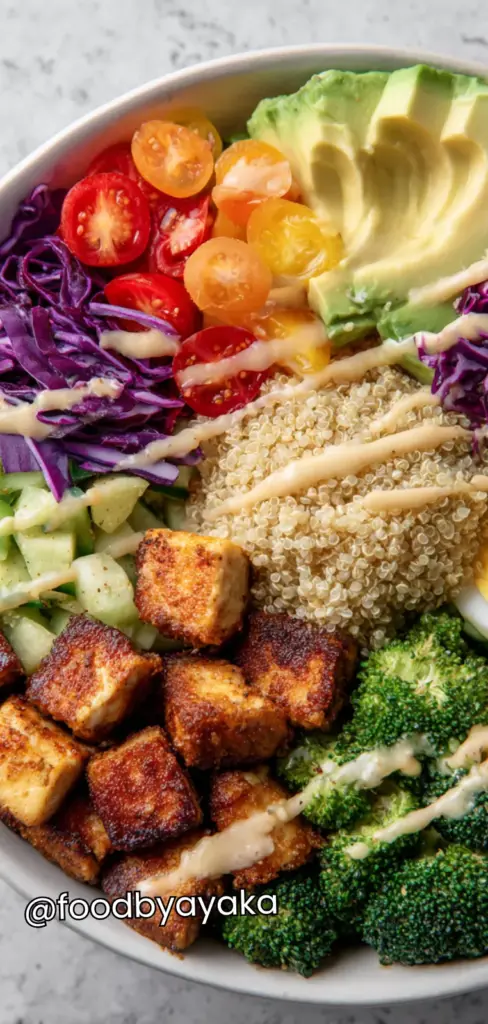
I like to serve this Buddha bowl in wide, shallow bowls so each ingredient can be arranged neatly and seen clearly. I usually start with a warm base of quinoa at the bottom, then carefully place the protein, vegetables, and toppings in separate sections on top. This style of plating makes the bowl visually appealing and also allows each component to keep its own texture and flavor until it’s mixed together.
I also enjoy adding the dressing right before serving rather than mixing it in advance. This keeps the vegetables crisp and the grains from becoming too soft. Sometimes I place the dressing in a small jar or bowl on the side, so it can be added gradually according to taste. A final touch of herbs, seeds, or a squeeze of lemon gives the bowl a fresh and vibrant finish.
I find this dish works well for both casual meals and more thoughtful presentations when serving guests. You can pair it with a light soup, a refreshing drink, or even enjoy it on its own as a complete and satisfying meal. Whether served warm or slightly chilled, it remains flavorful, balanced, and comforting in every bite.
Is High-Protein Buddha Bowl healthy?
Yes, this High-Protein Buddha Bowl is generally very healthy because it includes a balanced combination of macronutrients and micronutrients. It provides plant-based protein from chickpeas and optional animal protein like chicken, complex carbohydrates from quinoa, healthy fats from avocado and olive oil, and a variety of vitamins and minerals from fresh vegetables. This combination supports energy, satiety, and overall wellness.
I also appreciate that it is naturally customizable, which means you can control sodium levels, fat content, and ingredients based on your dietary needs. When prepared with fresh, whole ingredients and a mindful dressing, it becomes a nutrient-rich meal that supports a healthy lifestyle without feeling restrictive.
Variations and Substitutions
- Vegan Protein Bowl
Replace chicken with tofu or tempeh for a fully plant-based version.
Pan-fry or bake tofu until golden for better texture.
Keep chickpeas for additional protein and fiber.
Use a tahini-based dressing for creaminess. - Mediterranean Style Bowl
Add olives, cucumbers, cherry tomatoes, and feta cheese.
Use quinoa or couscous as the base.
Swap dressing with a lemon-olive oil vinaigrette.
Top with fresh parsley or oregano. - Low-Carb Version
Replace quinoa with cauliflower rice.
Increase the portion of protein and healthy fats.
Add more leafy greens like spinach or arugula.
Keep the dressing light and citrus-based. - Spicy Bowl
Add chili flakes, sriracha, or spicy roasted chickpeas.
Include pickled jalapeños for extra heat.
Use a spicy yogurt or chili-lime dressing.
Balance spice with creamy avocado. - Grain-Free Bowl
Skip grains entirely and use a leafy green base.
Combine kale, spinach, or romaine lettuce.
Add extra vegetables and protein for fullness.
Use a thicker dressing to bring components together. - Breakfast Buddha Bowl
Include a soft-boiled egg instead of chicken.
Add roasted sweet potatoes and avocado.
Top with seeds and a light drizzle of yogurt.
Keep the flavors mild and slightly savory. - Asian-Inspired Bowl
Use sesame oil, soy sauce, and ginger in the dressing.
Add edamame, shredded cabbage, and carrots.
Include grilled chicken or tofu.
Top with sesame seeds and green onions. - High-Calorie Muscle Gain Bowl
Increase portion sizes of quinoa and protein.
Add nuts, seeds, and extra avocado.
Use a richer dressing with tahini or nut butter.
Ideal for those needing higher energy intake.
How to store
I usually store each component separately in airtight containers in the refrigerator to maintain freshness. The grains, proteins, and vegetables can all be prepared in advance and kept chilled for up to 3–4 days. The dressing should also be stored separately to prevent the bowl from becoming soggy. When everything is stored properly, assembling the bowl later becomes quick and easy.
How to reheat
To reheat, I gently warm the grains and protein in the microwave or on the stovetop until just heated through. Avoid overheating the vegetables to keep their texture intact. Fresh ingredients like avocado and cucumber should always be added after reheating. Once warmed, assemble the bowl again and add the dressing right before serving for the best taste and texture.
Frequently Asked Questions About High-Protein Buddha Bowl
Can I prepare a High-Protein Buddha Bowl in advance?
Yes, this bowl is excellent for meal prep and can be prepared ahead of time.
You can cook the grains, proteins, and vegetables separately and store them in airtight containers.
Keep the dressing apart and assemble everything just before serving to maintain freshness and texture.
What is the best way to keep the ingredients fresh for several days?
Store each ingredient in separate containers in the refrigerator.
Make sure vegetables are completely dry before storing to avoid excess moisture.
Most components will stay fresh for up to 3–4 days when properly stored.
Can I make this recipe completely vegan?
Yes, simply replace animal-based proteins like chicken with tofu, tempeh, or extra chickpeas.
Use plant-based dressings such as tahini-lemon or olive oil vinaigrette.
The bowl remains high in protein even without animal products.
How can I make the bowl more filling?
You can increase the portion of quinoa or add more protein sources.
Including healthy fats like avocado, nuts, or seeds also helps increase satiety.
Balancing all macronutrients ensures the meal keeps you full for longer.
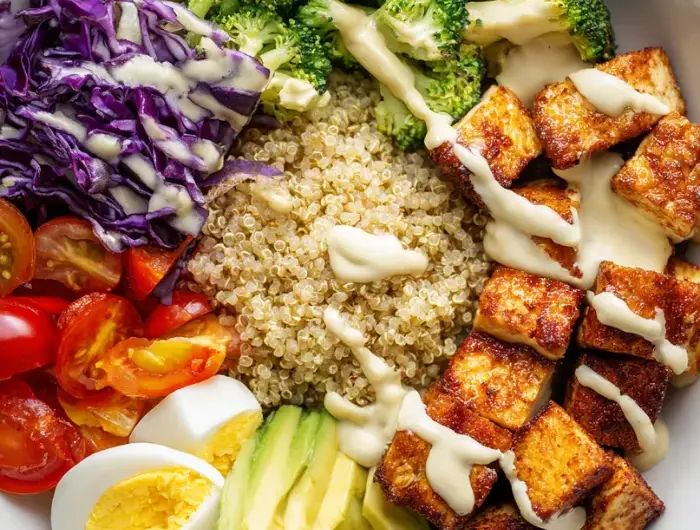
High-Protein Buddha Bowl Recipe
Course: Main DishCuisine: AmericanDifficulty: EasyServings
2
servingsPrep time
15
minutesCooking time
20
minutesHigh-Protein Buddha Bowl recipe made with quinoa, chickpeas, fresh vegetables, and a creamy dressing. Healthy, customizable, easy meal prep bowl packed with protein and nutrients.
Ingredients
1 cup cooked quinoa
1 cup chickpeas (cooked or canned, drained and rinsed)
1 cup cooked chicken breast, sliced (or tofu for vegetarian option)
1/2 cup steamed broccoli florets
1/2 cup shredded carrots
1/2 avocado, sliced
1/4 cup cucumber, sliced
2 tablespoons olive oil
1 tablespoon lemon juice
1 tablespoon tahini
1 teaspoon honey or maple syrup
1 clove garlic, minced
Salt and black pepper to taste
Optional toppings: sesame seeds, chopped parsley, chili flakes
Directions
- Prepare the base: Start by cooking the quinoa according to package instructions if not already prepared. Once cooked, fluff it with a fork and let it cool slightly before assembling the bowl so it doesn’t wilt the fresh ingredients.
- Prepare the protein: If using chicken, make sure it is already cooked and sliced into strips. For extra flavor, you can lightly season it with salt, pepper, and a squeeze of lemon juice. If using tofu, pan-fry or bake it until golden and slightly crispy on the edges.
- Warm and prep vegetables: Steam or lightly sauté the broccoli until tender but still vibrant green. Slice the carrots, cucumber, and avocado into bite-sized pieces so they are easy to eat and layer in the bowl.
- Assemble the bowl: Divide the quinoa evenly between serving bowls as the base. Arrange the chickpeas, chicken (or tofu), broccoli, carrots, cucumber, and avocado neatly on top, grouping each ingredient for a visually appealing presentation.
- Make the dressing: In a small bowl, whisk together olive oil, lemon juice, tahini, honey (or maple syrup), minced garlic, salt, and black pepper. Mix until smooth and creamy. If the dressing is too thick, add a teaspoon of water at a time until it reaches your desired consistency.
- Finish and serve: Drizzle the dressing generously over the assembled bowls. Sprinkle with optional toppings like sesame seeds, parsley, or chili flakes for added texture and flavor. Serve immediately while fresh, or store components separately if preparing ahead.