
Quick & Easy Recipes for Everyday Cooks
Welcome to Food By Ayaka!
Chicken Pad Thai Recipe
My mother always loved making noodle dishes, but Chicken Pad Thai in our home is something a little more modern and exciting. She used to say that the magic is in the sauce, and honestly, she was right. In our kitchen, Pad Thai is not just food, it’s a quick way to bring everyone together at the table, especially on busy days when we still want something warm and satisfying.
Chicken Pad Thai is one of those comforting dishes that feels both simple and special at the same time. It brings together soft rice noodles, tender chicken, and a perfect balance of sweet, salty, and tangy flavors. What I love most about it is how every bite feels layered — a little crunch from vegetables, a bit of richness from eggs, and that signature sauce that ties everything together beautifully. It’s the kind of meal that looks impressive but is actually very easy to make once you understand the steps.
I have made this recipe so many times, and over the years I’ve learned what works best. I use fresh ingredients whenever possible, a good balance of sauce, and I never rush the cooking process. Always cook on medium-high heat so everything stays vibrant and slightly crisp instead of soggy.
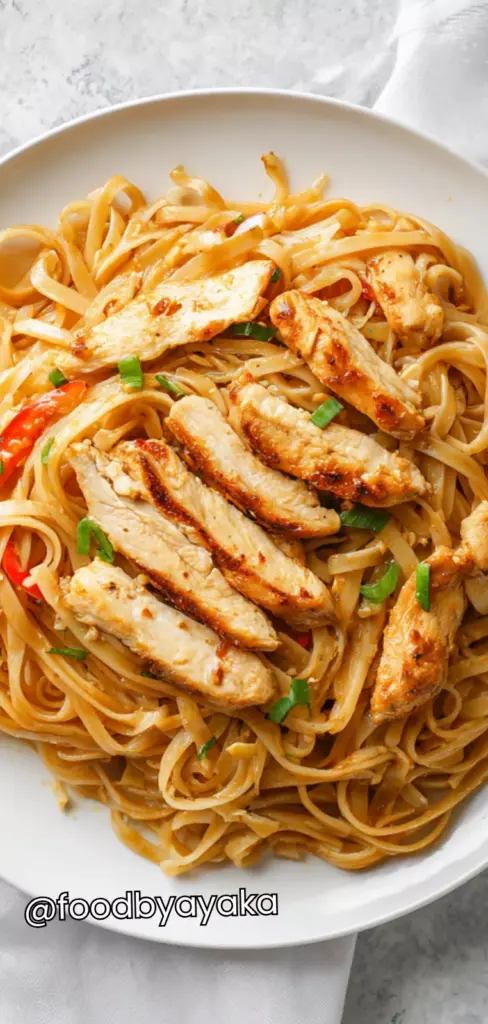
You can serve Chicken Pad Thai fresh off the pan, some crushed peanuts on top for crunch, also with a wedge of lime for that bright, fresh finish that really wakes up the flavors.
Its Perfect For:
- Quick weeknight dinners when you want something flavorful but easy
- Casual family meals that everyone will enjoy
- Meal prep lunches because it reheats well
- Small gatherings or dinner with friends
- When you’re craving takeout but want a homemade version
Ingredients
- 8 oz rice noodles
- 2 tablespoons vegetable oil
- 2 chicken breasts, thinly sliced
- 3 cloves garlic, minced
- 2 eggs
- 1 cup bean sprouts
- 1/2 cup shredded carrots
- 3 green onions, chopped
- 1/4 cup crushed peanuts
- 2 tablespoons fish sauce
- 2 tablespoons tamarind paste
- 1 tablespoon soy sauce
- 2 tablespoons brown sugar
- 1 tablespoon lime juice
- 1/2 teaspoon chili flakes (optional)
Kitchen Equipment You’ll Need
- Large pan or wok
- Mixing bowls
- Knife and cutting board
- Wooden spoon or spatula
- Measuring cups and spoons
- Small saucepan (for sauce if needed)
How to make Chicken Pad Thai
Step 1
Prepare the noodles: Place the rice noodles in a large bowl and cover with warm water. Let them soak for about 10–15 minutes until they are soft but still slightly firm to the bite. Drain well and set aside, gently tossing them so they don’t stick together while you prepare the rest of the ingredients.
Step 2
Cook the chicken: Heat 1 tablespoon of vegetable oil in a large pan or wok over medium-high heat. Add the sliced chicken and cook for 5–6 minutes, stirring occasionally, until the chicken is fully cooked through and lightly golden on the edges. Remove the chicken from the pan and set it aside.
Step 3
Sauté aromatics: In the same pan, add the remaining tablespoon of oil. Add the minced garlic and sauté for about 30 seconds until fragrant, stirring constantly to prevent it from burning and turning bitter.
Step 4
Cook the eggs: Push the garlic to one side of the pan and crack the eggs into the empty space. Scramble them gently, breaking them into small soft pieces as they cook, then mix them together with the garlic.
Step 5
Combine noodles and sauce: Add the soaked noodles back into the pan along with the cooked chicken. In a small bowl, whisk together the fish sauce, tamarind paste, soy sauce, brown sugar, lime juice, and chili flakes. Pour this sauce over the noodles and toss everything thoroughly, making sure the noodles are evenly coated and begin to absorb the rich, tangy flavors.
Step 6
Add vegetables: Stir in the bean sprouts, shredded carrots, and green onions. Continue cooking for another 2–3 minutes, tossing constantly, until the vegetables are slightly softened but still crisp to keep a nice texture contrast.
Step 7
Finish and serve: Remove from heat and transfer to serving plates. Sprinkle generously with crushed peanuts on top and add an extra squeeze of fresh lime juice if desired. Serve immediately while hot for the best taste and texture.
Tips
- Soak the noodles properly
Make sure you don’t over-soak the rice noodles because they can become too soft and break apart. They should still have a slight firmness when you drain them. This helps them hold their shape when cooking. - Use high heat but control it
Cooking on medium-high heat gives you that authentic stir-fry texture. However, keep stirring so nothing burns, especially the garlic and sauce. Balance is key here. - Don’t overcrowd the pan
If you add too many ingredients at once, everything will steam instead of fry. Cook in batches if needed so you get better texture and flavor. - Prepare everything first
Pad Thai cooks very quickly, so it’s important to have all your ingredients ready before you start. This makes the process smooth and stress-free. - Balance the sauce flavors
Taste your sauce before adding it. You want a mix of sweet, salty, and tangy. Adjust with a little sugar or lime if needed to get it just right. - Add vegetables at the right time
Vegetables should go in toward the end so they stay slightly crisp. Overcooking them will make the dish feel heavy and less fresh. - Finish with toppings
Don’t skip the final touches like peanuts and lime. They may seem small, but they add texture and brightness that complete the dish perfectly.
Optional Ingredients
- Shrimp (for extra protein and flavor)
- Tofu (great vegetarian option)
- Red bell peppers (adds sweetness and color)
- Chili sauce (for more heat)
- Cilantro (for freshness)
- Extra lime juice (for a stronger tangy taste)
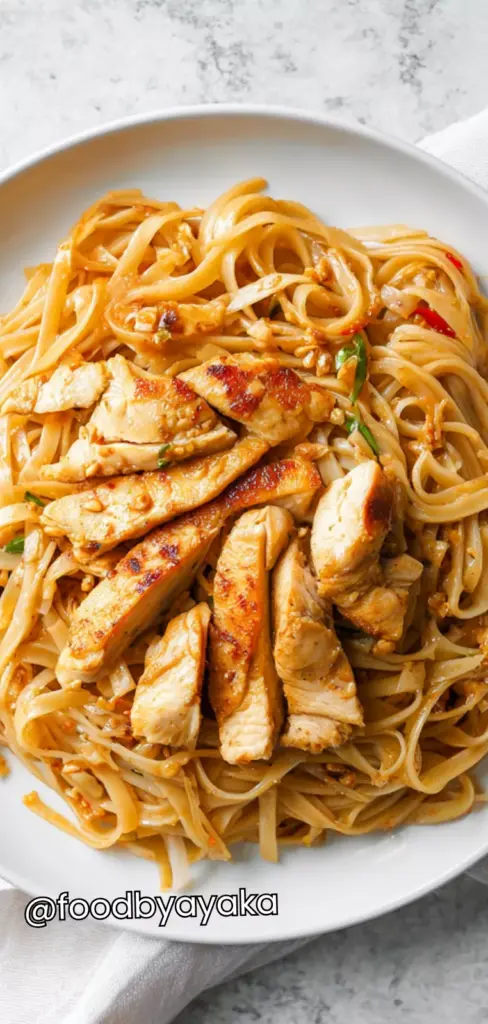
How to serve Chicken Pad Thai?
I like to serve Chicken Pad Thai immediately after cooking while it is still hot, glossy, and full of aroma. I usually plate it in a wide bowl or shallow plate so the noodles are spread out nicely instead of being piled too high. This helps keep the texture light and allows the sauce to stay evenly coated on every strand of noodle. I always finish the plating with a generous sprinkle of crushed peanuts on top because it adds a satisfying crunch that contrasts beautifully with the soft noodles.
I also make sure to include fresh lime wedges on the side because that final squeeze of citrus really enhances the overall flavor. When the lime juice mixes with the warm noodles, it brightens the dish and balances the sweetness and saltiness of the sauce. Sometimes I like to add a small handful of extra bean sprouts or a few fresh green onions on top just before serving to give a fresh and crisp finish.
I often pair Chicken Pad Thai with light side dishes to complete the meal without overpowering the main dish. A simple cucumber salad, fresh herbs, or a light soup works very well alongside it. This creates a balanced dining experience where the Pad Thai remains the star while the sides add freshness and variety to each bite.
Is Chicken Pad Thai healthy?
Chicken Pad Thai can be a healthy meal when made at home because you control the ingredients and portions. It includes protein from the chicken, vegetables for fiber, and noodles for energy, which makes it quite balanced overall.
However, the sauce can contain sugar and sodium, so it’s important to keep it moderate. Using less sugar and adding more vegetables can make it lighter and more nutritious without losing flavor.
Variations and Substitutions
- Shrimp Pad Thai
You can replace the chicken with shrimp for a lighter and slightly sweeter flavor. Shrimp cooks quickly, so you need to be careful not to overcook it. It pairs beautifully with the tangy sauce. - Vegetarian Pad Thai
Swap the chicken for tofu and use soy sauce instead of fish sauce. This version is still full of flavor and very satisfying. Make sure to cook the tofu until golden for better texture. - Beef Pad Thai
Thinly sliced beef can be used instead of chicken for a richer taste. It adds a deeper flavor and works well with the sauce. Cook it quickly so it stays tender. - Spicy Pad Thai
If you enjoy heat, add extra chili flakes or chili sauce. This version has a bold kick that makes the dish more exciting. Adjust the spice level to your preference. - Low-carb version
Replace rice noodles with zucchini noodles or another vegetable-based option. This makes the dish lighter and lower in carbs. It’s perfect if you want a healthier twist. - Extra vegetable Pad Thai
Add more vegetables like broccoli, bell peppers, or snap peas. This increases nutrition and gives more texture. It also makes the dish more colorful and vibrant. - Peanut-heavy version
If you love peanuts, you can add a bit of peanut butter to the sauce. This creates a richer and creamier flavor. It’s a delicious variation for peanut lovers. - Gluten-free version
Use gluten-free soy sauce and check all your ingredients carefully. This makes the dish safe for those with gluten sensitivity. The flavor remains just as delicious.
How to store, How to reheat
To store Chicken Pad Thai, let it cool completely before placing it in an airtight container. Keep it in the refrigerator for up to 3 days. Try not to leave it at room temperature for too long, as noodles can spoil quickly if not handled properly.
To reheat, I prefer using a pan over medium heat with a small splash of water to loosen the noodles. Stir gently until heated through. You can also use a microwave, but make sure to cover it and heat in short intervals to prevent it from drying out.
Frequently Asked Questions About Chicken Pad Thai
Can I make Chicken Pad Thai ahead of time?
Yes, you can prepare Chicken Pad Thai ahead of time and store it in the refrigerator for later use. It is best consumed fresh, but reheating gently in a pan helps bring back its texture and flavor. Avoid overcooking during reheating to keep the noodles from becoming too soft.
What can I use instead of tamarind paste?
If tamarind paste is not available, you can substitute it with a mixture of lime juice and a small amount of vinegar. While the flavor will not be exactly the same, this combination still provides a pleasant tangy profile that works well with the other ingredients. Adjust the balance to suit your taste.
Why are my noodles sticking together?
Noodles may stick together if they are over-soaked or not tossed properly during cooking. To avoid this, make sure to drain them well and add them to the pan while still slightly firm. Stir frequently so the sauce coats each strand evenly and prevents clumping.
Can I freeze Chicken Pad Thai?
Freezing is not highly recommended because rice noodles tend to lose their texture after thawing. They can become mushy and less enjoyable. It is better to store leftovers in the refrigerator and consume them within a few days for the best quality.
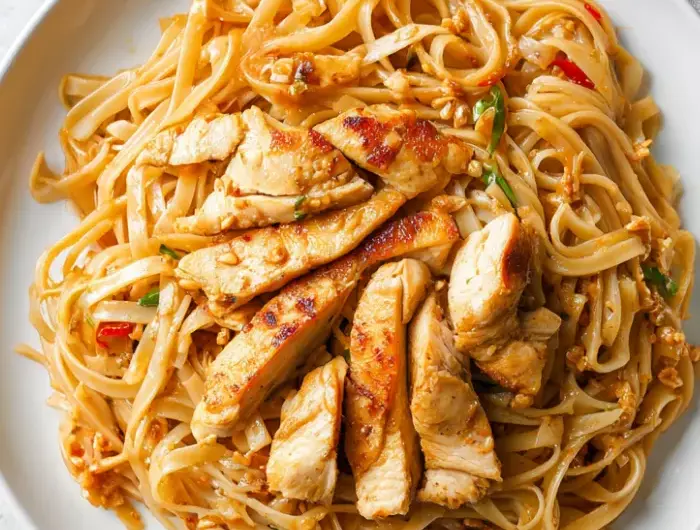
Chicken Pad Thai Recipe
Course: Main CourseCuisine: ThaiDifficulty: EasyServings
4
servingsPrep time
20
minutesCooking time
15
minutesCalories
300
kcalLearn how to make authentic Chicken Pad Thai at home with tender chicken, rice noodles, and a perfectly balanced sweet, tangy, and savory sauce. Easy step-by-step recipe, tips, and variations for a delicious Thai-inspired meal.
Ingredients
8 oz rice noodles
2 tablespoons vegetable oil
2 chicken breasts, thinly sliced
3 cloves garlic, minced
2 eggs
1 cup bean sprouts
1/2 cup shredded carrots
3 green onions, chopped
1/4 cup crushed peanuts
2 tablespoons fish sauce
2 tablespoons tamarind paste
1 tablespoon soy sauce
2 tablespoons brown sugar
1 tablespoon lime juice
1/2 teaspoon chili flakes (optional)
Directions
- Prepare the noodles: Place the rice noodles in a large bowl and cover with warm water. Let them soak for about 10–15 minutes until they are soft but still slightly firm to the bite. Drain well and set aside, gently tossing them so they don’t stick together while you prepare the rest of the ingredients.
- Cook the chicken: Heat 1 tablespoon of vegetable oil in a large pan or wok over medium-high heat. Add the sliced chicken and cook for 5–6 minutes, stirring occasionally, until the chicken is fully cooked through and lightly golden on the edges. Remove the chicken from the pan and set it aside.
- Sauté aromatics: In the same pan, add the remaining tablespoon of oil. Add the minced garlic and sauté for about 30 seconds until fragrant, stirring constantly to prevent it from burning and turning bitter.
- Cook the eggs: Push the garlic to one side of the pan and crack the eggs into the empty space. Scramble them gently, breaking them into small soft pieces as they cook, then mix them together with the garlic.
- Combine noodles and sauce: Add the soaked noodles back into the pan along with the cooked chicken. In a small bowl, whisk together the fish sauce, tamarind paste, soy sauce, brown sugar, lime juice, and chili flakes. Pour this sauce over the noodles and toss everything thoroughly, making sure the noodles are evenly coated and begin to absorb the rich, tangy flavors.
- Add vegetables: Stir in the bean sprouts, shredded carrots, and green onions. Continue cooking for another 2–3 minutes, tossing constantly, until the vegetables are slightly softened but still crisp to keep a nice texture contrast.
- Finish and serve: Remove from heat and transfer to serving plates. Sprinkle generously with crushed peanuts on top and add an extra squeeze of fresh lime juice if desired. Serve immediately while hot for the best taste and texture.