
Quick & Easy Recipes for Everyday Cooks
Welcome to Food By Ayaka!
Greek Salad Recipe
I like salads that are crisp and vibrant, but what I love the most in a Greek Salad is how everything blends so beautifully—the juicy tomatoes, crunchy cucumbers, and salty olives creating a perfect balance of textures and flavors. Nothing feels heavy, but every bite still tastes rich and comforting. It’s simple, but there’s something timeless and charming about it. This recipe brings together simple vegetables, creamy feta cheese, and a tangy dressing that tastes like summer in every bite. It’s the kind of salad you can put together quickly, yet it still feels elegant and satisfying.
I have always enjoyed making this salad on days when I want something fresh without spending too much time in the kitchen. I use ripe tomatoes, fresh cucumbers, red onion, olives, and high-quality feta cheese. Always use good olive oil—Greek if possible—because it truly makes a difference in the dressing and brings out the natural flavor of the vegetables.
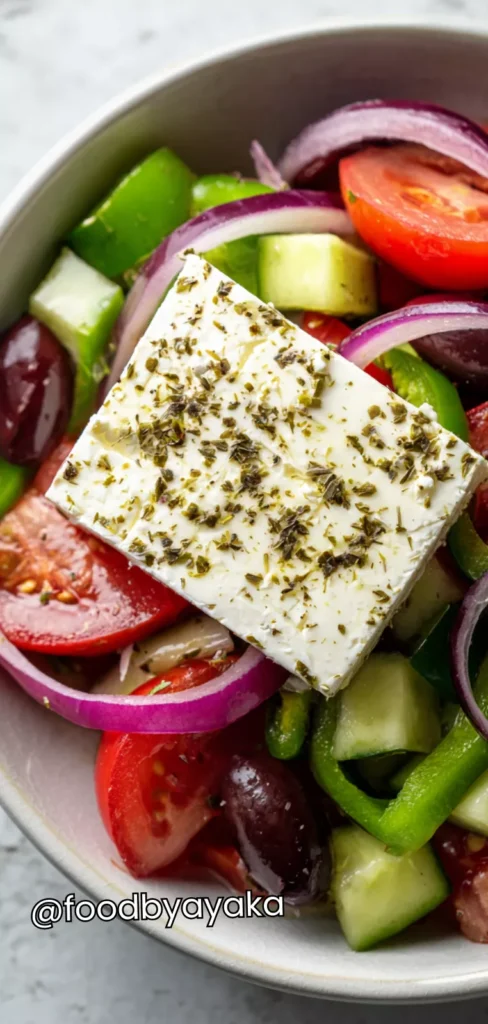
You can serve this Greek Salad as a side dish with grilled chicken or fish, some warm pita bread, also with roasted potatoes or any main dish that needs something light and refreshing.
It’s Perfect For:
- Hot summer days when you want something crisp and light
- Weeknight dinners that need a quick side dish
- Family gatherings or potlucks
- Healthy lunches that won’t leave you feeling heavy
- Mediterranean-style meals
Ingredients
- 3 cups ripe tomatoes, chopped
- 1 large cucumber, peeled and sliced
- 1 small red onion, thinly sliced
- 1 green bell pepper, sliced
- 1/2 cup Kalamata olives, pitted
- 1 cup feta cheese, cut into cubes or crumbled
- 2 tablespoons extra-virgin olive oil
- 1 tablespoon red wine vinegar
- 1 teaspoon dried oregano
- Salt and black pepper, to taste
- Optional: fresh parsley, chopped
Kitchen Equipment You’ll Need
- Large mixing bowl
- Sharp knife
- Cutting board
- Small bowl for dressing
- Salad tongs or spoons
How to Make Greek Salad
Step 1
Prepare the vegetables: Wash all your vegetables thoroughly. Chop the tomatoes into bite-sized chunks, slice the cucumber into half-moons, thinly slice the red onion, and cut the bell pepper into strips. Try to keep the pieces relatively similar in size so the salad looks beautiful and mixes evenly. Add everything to a large salad bowl.
Step 2
Add the olives and feta: Toss in the Kalamata olives, making sure they’re pitted for easy eating. Add the feta on top. You can crumble it for a creamier texture or keep them in cubes for a more rustic presentation—both work perfectly and are equally traditional.
Step 3
Make the dressing: In a small bowl, whisk together olive oil, red wine vinegar, oregano, and a light pinch of salt and pepper. Give it a good whisk until the dressing looks slightly emulsified and aromatic. Taste and adjust the seasoning to your preference.
Step 4
Combine the salad: Pour the dressing over the vegetables. Gently toss everything together, making sure the feta doesn’t break too much (unless you prefer a more blended, creamy texture). Allow the salad to sit for 5–10 minutes so the flavors combine—this step makes a noticeable difference.
Step 5
Serve the salad: Transfer to a serving dish or bring the bowl straight to the table. Add a sprinkle of extra oregano or fresh parsley on top right before serving for added fragrance and color. This salad is best enjoyed immediately while the vegetables are crisp and refreshing.
Tips for the Best Greek Salad
- Use ripe tomatoes.
Ripe tomatoes add natural sweetness, bright color, and juicy texture. Unripe ones can make the salad watery or dull, so choose tomatoes that smell fragrant and feel slightly soft. - Slice vegetables evenly.
Evenly sized pieces look prettier and make each bite balanced. Similar-sized chunks of cucumbers, peppers, and tomatoes create harmony in texture and flavor. - Don’t skip the resting time.
Letting the salad sit for 5–10 minutes after dressing allows the vegetables to absorb the flavors. It softens the onions slightly and helps everything blend beautifully. - Use good-quality feta cheese.
Greek feta made from sheep or goat’s milk is creamier, less crumbly, and more flavorful. It holds its shape and adds the perfect salty softness. - Keep the dressing simple.
Greek salads don’t need fancy sauces. Olive oil, vinegar, oregano, salt, and pepper let the vegetables shine naturally. - Add salt last.
Olives and feta are already salty. Adding salt early will draw out water from the tomatoes and cucumbers, making the salad watery. - Serve immediately for maximum crunch.
Freshness is everything. Serving right away keeps the cucumbers crisp, the tomatoes juicy, and the feta firm.
Optional Ingredients
- Fresh mint leaves
- Avocado
- Capers
- Cherry tomatoes
- Lemon zest
- Sumac

How to Serve Greek Salad?
I like serving Greek Salad in a large, shallow bowl because it allows the colors to shine and prevents the ingredients from being buried under each other. The bright tomatoes, green cucumbers, and creamy feta look so inviting when spread evenly. I often drizzle a touch more olive oil on top before serving because it gives the salad a beautiful glossy finish.
I enjoy serving this salad with grilled meats like chicken, shrimp, or pork chops because the freshness cuts through smoky or rich flavors perfectly. It also goes well with pasta dishes, roasted vegetables, or lemon-seasoned potatoes. Sometimes I make it the main dish by adding grilled chicken or chickpeas on top for more protein.
I love pairing Greek Salad with warm pita bread, toasted baguette slices, or crunchy breadsticks. The bread absorbs the leftover dressing, which tastes even better as it mixes with tomato juice and herbs. It makes the meal feel wholesome and satisfying, even when keeping things simple.
Is Greek Salad Healthy?
Yes, Greek Salad is very healthy. It’s filled with vegetables rich in vitamins, antioxidants, and fiber. These help support digestion, energy, and overall health. It’s naturally low in calories and incredibly refreshing.
The olive oil adds heart-healthy fats, and the feta provides protein and calcium. When served in reasonable portions, Greek Salad is a nutritious and balanced addition to any diet.
Variations and Substitutions
- Village-Style Greek Salad
Skip the lettuce and keep it traditional. Use tomatoes, cucumbers, onions, peppers, olives, and a slab of feta on top. It’s rustic, juicy, and very authentic. - Greek Salad with Lettuce
Add chopped romaine for extra crunch and more volume. This version feels lighter and is great for family-sized servings. - Creamy Greek Salad
Mix a little Greek yogurt into the dressing. This makes the salad creamier while keeping the flavors fresh and tangy. - Protein-Packed Greek Salad
Add grilled chicken, shrimp, or chickpeas. This turns the salad into a full, satisfying meal without losing its freshness. - Vegan Greek Salad
Use vegan feta or skip cheese entirely. Add chickpeas, capers, or extra cucumbers for flavor and texture. - Olive-Free Version
Simply omit olives if you don’t enjoy them. Replace them with extra cucumbers or tomatoes for balance. - Herb-Boosted Greek Salad
Add fresh herbs like parsley, dill, or mint for an aromatic and refreshing twist. - Lemon-Vinaigrette Greek Salad
Use lemon juice instead of red wine vinegar for a citrusy, bright variation.
How to Store & How to Reheat
To store, keep the vegetables undressed in an airtight container for up to 2 days. Store the dressing separately to keep everything crisp. Add the feta only when serving so it stays firm and doesn’t break apart.
Greek Salad should not be reheated because it’s made with fresh vegetables and cheese that taste best chilled. If you want it less cold, simply let the salad sit at room temperature for 10–15 minutes before eating.
Frequently Asked Questions About Greek Salad
Can I make Greek Salad ahead of time?
Yes, but the ingredients must be stored separately. Keep the chopped vegetables in a container, the feta in another, and the dressing in a small jar. Mix them only when serving to maintain freshness and crunch.
What type of feta should I use?
Feta in brine made from sheep’s or goat’s milk is the best choice. It’s creamy, tangy, and keeps its shape beautifully. Avoid pre-crumbled feta because it’s usually drier and less flavorful.
Can I use apple cider vinegar instead of red wine vinegar?
Yes, it works well. Apple cider vinegar has a slightly sweet, fruity taste that still gives a nice tang. Just use the same amount and adjust seasoning as needed.
Do I need to peel the cucumber?
Peeling is optional. If the skin is thick or waxy, peeling makes the texture smoother. If it’s an English cucumber or thin-skinned variety, leaving the peel adds color and nutrients.
Greek Salad Recipe
Course: Appetizer / SideCuisine: Greek / MediterraneanDifficulty: EasyServings
4
servingsPrep time
15
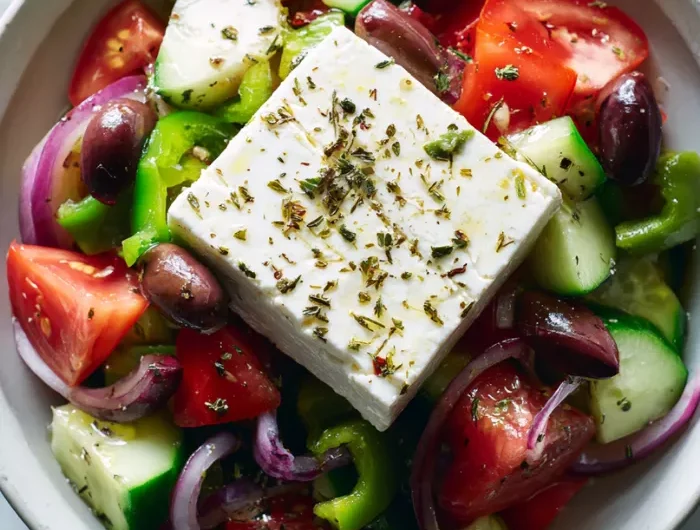
minutesFresh, crisp, and easy to make, this Greek Salad recipe combines tomatoes, cucumbers, olives, and feta with a simple dressing. A perfect Mediterranean side dish.
Ingredients
3 cups ripe tomatoes, chopped
1 large cucumber, peeled and sliced
1 small red onion, thinly sliced
1 green bell pepper, sliced
1/2 cup Kalamata olives, pitted
1 cup feta cheese, cut into cubes or crumbled
2 tablespoons extra-virgin olive oil
1 tablespoon red wine vinegar
1 teaspoon dried oregano
Salt and black pepper, to taste
Optional: fresh parsley, chopped
Directions
- Prepare the vegetables: Wash all your vegetables thoroughly. Chop the tomatoes into bite-sized chunks, slice the cucumber into half-moons, thinly slice the red onion, and cut the bell pepper into strips. Try to keep the pieces relatively similar in size so the salad looks beautiful and mixes evenly. Add everything to a large salad bowl.
- Add the olives and feta: Toss in the Kalamata olives, making sure they’re pitted for easy eating. Add the feta on top. You can crumble it for a creamier texture or keep them in cubes for a more rustic presentation—both work perfectly and are equally traditional.
- Make the dressing: In a small bowl, whisk together olive oil, red wine vinegar, oregano, and a light pinch of salt and pepper. Give it a good whisk until the dressing looks slightly emulsified and aromatic. Taste and adjust the seasoning to your preference.
- Combine the salad: Pour the dressing over the vegetables. Gently toss everything together, making sure the feta doesn’t break too much (unless you prefer a more blended, creamy texture). Allow the salad to sit for 5–10 minutes so the flavors combine—this step makes a noticeable difference.
- Serve the salad: Transfer to a serving dish or bring the bowl straight to the table. Add a sprinkle of extra oregano or fresh parsley on top right before serving for added fragrance and color. This salad is best enjoyed immediately while the vegetables are crisp and refreshing.